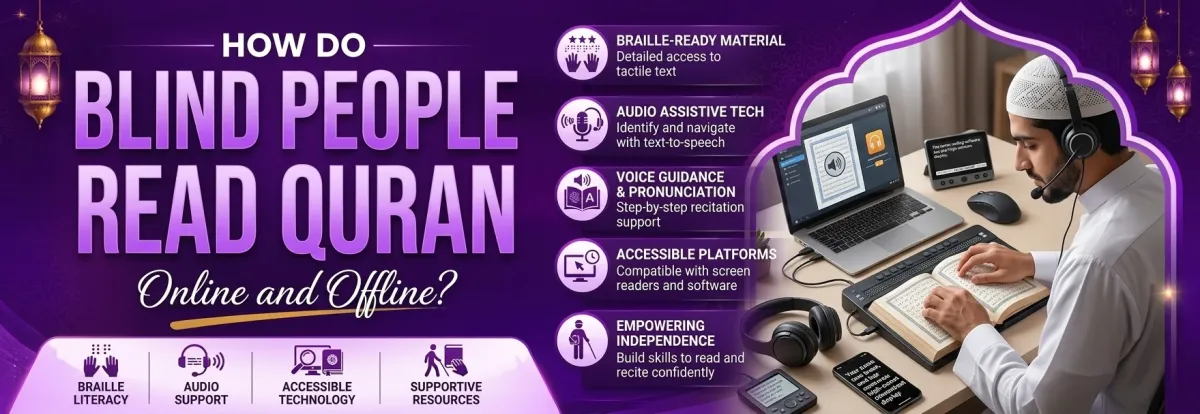
How Do Blind People Read Quran Online and Offline?
Introduction
The Quran is a source of guidance for every Muslim, including those who are visually impaired. Many people wonder how blind individuals are able to read, learn, and memorize the Quran. Thanks to modern technology and specialized learning methods, blind Muslims can access Quran education both online and offline with ease.
Today, visually impaired students have access to Braille Qurans, audio resources, screen readers, and online Quran classes that help them develop strong recitation and memorization skills. These learning methods allow blind people to connect with the Quran independently and confidently.
How Blind People Read the Quran Offline
Offline Quran learning has been helping visually impaired Muslims for many years. Special educational tools make it possible for blind students to learn and recite the Quran without relying on visual text.
Braille Quran
The most common method is the Braille Quran. Braille is a reading and writing system that uses raised dots that can be felt with the fingertips. Blind individuals can read Quranic verses by touching and recognizing these patterns.
The Braille Quran allows students to read independently and practice Quran recitation at their own pace. Many Islamic organizations and educational institutions provide Braille Quran copies for visually impaired learners.
Learning Through Audio Recordings
Audio Quran recordings are another valuable offline resource. Blind students can listen to skilled Quran reciters and follow along carefully. Repeated listening helps improve pronunciation, memorization, and understanding of Quranic verses.
Many students use audio recordings daily to strengthen their recitation skills and revise previously memorized Surahs.
Learning With Quran Teachers
Traditional Quran teachers also play an important role in helping blind students learn. Teachers guide students through proper pronunciation, Tajweed rules, and memorization techniques. Since blind learners often develop strong listening skills, many can memorize large portions of the Quran through oral instruction.
How Blind People Read Quran Online
Technology has made Quran learning more accessible than ever before. Online learning allows visually impaired students to connect with qualified Quran teachers from anywhere in the world.
Screen Reader Technology
Screen readers are special software programs that convert text into speech. These tools allow blind users to navigate websites, Quran learning platforms, and educational resources independently.
Students can listen to Quranic text, access learning materials, and participate in online lessons without needing visual assistance.
Online Quran Classes
Online Quran classes provide a convenient way for blind students to learn from home. Through audio or video sessions, qualified tutors help students improve recitation, learn Tajweed, and memorize Quranic verses.
One-on-one online classes are especially helpful because teachers can focus on each student's individual learning needs and provide personalized guidance.
Mobile Apps and Digital Resources
Many Quran apps include accessibility features designed for visually impaired users. Voice commands, audio playback, and screen reader compatibility make it easier for blind students to study the Quran using smartphones and tablets.
These digital tools provide flexibility and allow students to continue learning anytime and anywhere.
Benefits of Online Quran Learning for Blind Students
Online Quran education offers several advantages for visually impaired learners.
Learn From Home
Students can attend classes from the comfort of their homes without the challenges of transportation or travel.
Access to Qualified Tutors
Online learning allows students to connect with experienced Quran teachers regardless of their location. This increases access to high-quality Quran education.
Flexible Class Schedules
Many online Quran academies offer flexible scheduling options, making it easier for students to choose lesson times that fit their daily routines.
Personalized Learning Experience
One-on-one sessions allow tutors to focus on the student's specific strengths and weaknesses. This helps improve recitation and memorization more effectively.
Challenges Blind Students May Face
Although many resources are available today, blind students can still face certain challenges when learning the Quran.
Some common difficulties include:
Limited availability of Braille Quran copies
Difficulty accessing specialized learning resources
Finding qualified teachers experienced in teaching visually impaired students
Learning new technology and accessibility tools
However, modern online Quran programs continue to make learning easier by providing accessible teaching methods and personalized support.
Can Blind People Memorize the Entire Quran?
Yes, many blind Muslims have successfully memorized the entire Quran and become Huffaz. In fact, strong listening skills often help visually impaired students excel in Quran memorization.
With regular practice, proper guidance, and dedication, blind learners can achieve the same Quran learning goals as sighted students.
Final Thoughts
Blind people can read and learn the Quran both online and offline through a variety of accessible tools and learning methods. Braille Qurans, audio recordings, screen readers, and online Quran classes provide valuable opportunities for visually impaired Muslims to strengthen their connection with the Quran.
As technology continues to improve, Quran education is becoming more accessible for everyone. With the right resources and qualified teachers, blind students can learn Tajweed, improve recitation, memorize Quranic verses, and continue their spiritual journey with confidence.