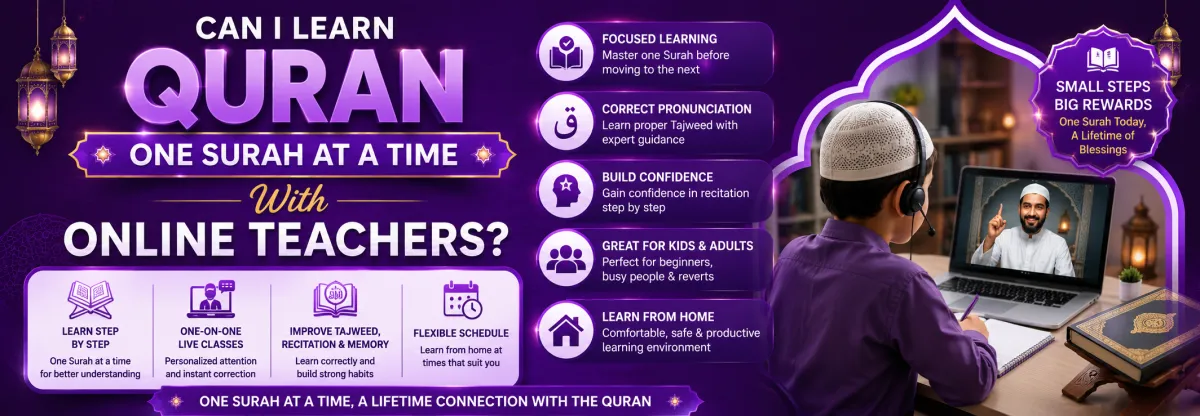
Can I Learn Quran One Surah at a Time With Online Teachers?
Yes, you can absolutely learn the Quran one Surah at a time with online teachers. In fact, this is one of the easiest and most effective ways for beginners, kids, and busy adults to build a strong connection with the Quran without feeling overwhelmed.
Online Quran classes are designed to make learning simple, flexible, and personalized. Instead of rushing through long lessons, students can focus on understanding, memorizing, and reciting one Surah properly before moving to the next. This step-by-step approach helps learners improve their Tajweed, pronunciation, confidence, and understanding at a comfortable pace.
Whether you are a complete beginner or someone returning to Quran learning after many years, learning one Surah at a time can help you stay motivated and consistent.
Why Learning One Surah at a Time Works Well
Many students struggle when they try to learn too much too quickly. Learning one Surah at a time allows students to fully focus on pronunciation, fluency, and memorization without pressure.
Online Quran teachers can repeat verses multiple times, correct mistakes instantly, and guide students slowly according to their learning speed. This method helps learners retain what they study and build confidence gradually.
It is especially beneficial for:
Kids who are just starting Quran learning
Adults with busy schedules
Reverts/new Muslims
Students who want to improve Tajweed
People who prefer flexible learning
Small and consistent progress often leads to better long-term results than trying to memorize large portions quickly.
How Online Quran Teachers Help Students Learn Better
Online Quran teachers provide personalized attention during live classes. Unlike pre-recorded videos, live sessions allow students to interact directly with qualified teachers and receive immediate correction.
Teachers usually start with short and easy Surahs from Juz Amma, helping students become comfortable with Quran reading and pronunciation. Once a student masters one Surah, the teacher gradually moves to the next.
Online teachers help students with:
Correct Tajweed Rules
Students learn proper pronunciation of Arabic letters and words. Teachers guide them on stopping points, stretching rules, and recitation flow.
Memorization Techniques
Teachers use repetition, listening practice, and revision methods to make memorization easier and more effective.
Confidence Building
One-on-one Quran classes help shy or nervous students feel comfortable asking questions and practicing openly.
Flexible Scheduling
Students in the USA can choose class timings that match school, work, or family routines.
Is This Method Good for Kids?
Yes, learning one Surah at a time is highly effective for children. Kids learn better when lessons are short, focused, and interactive.
Online Quran teachers often use engaging methods to keep children interested during class. They revise previous Surahs regularly and help students improve gradually without pressure.
This approach helps children:
Develop love for the Quran
Improve concentration
Build strong memorization habits
Learn proper pronunciation early
Stay motivated through achievable goals
Parents also find it easier to track their child’s progress when learning is divided into smaller milestones.
Can Adults Learn the Quran This Way Too?
Absolutely. Many adults prefer learning one Surah at a time because it fits easily into busy lifestyles. Even spending 20 to 30 minutes daily with an online Quran teacher can produce steady improvement over time.
Adults often appreciate the ability to learn privately at their own pace without feeling rushed or embarrassed. Online classes allow them to focus on recitation, memorization, and understanding comfortably from home.
Consistency matters more than speed. Learning gradually with regular practice can lead to strong Quran reading skills and long-term retention.
Final Thoughts
Learning the Quran one Surah at a time with online teachers is a practical, flexible, and effective method for both kids and adults. It removes pressure, improves focus, and helps students build confidence step by step.
With qualified online Quran teachers, personalized lessons, and flexible schedules, students in the USA can easily start their Quran learning journey from home. One Surah at a time may seem like a small step, but it can lead to a lifelong connection with the Quran.