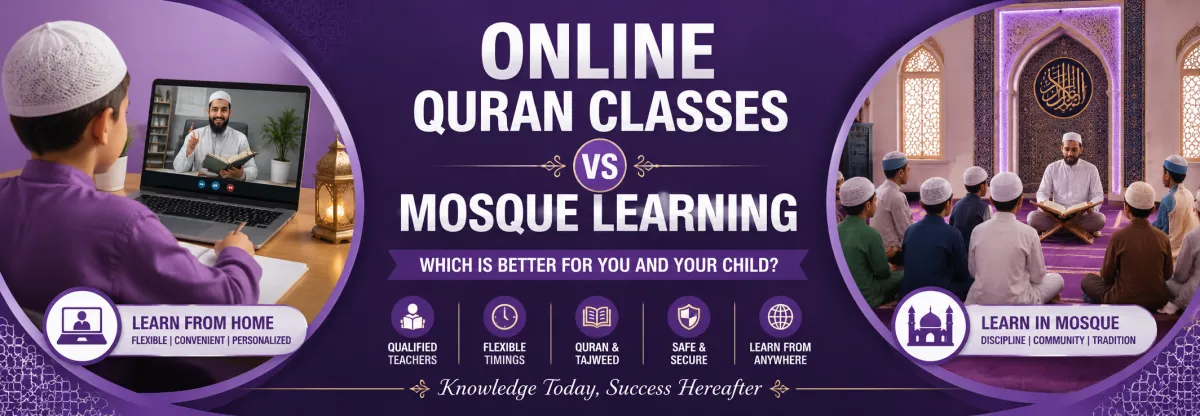
Guide To Online vs Offline Mosque Learning
Learning the Quran and Islamic education has evolved significantly over the years. Traditionally, students attended local mosques or madrassas to learn Quran recitation, Tajweed, memorization, and Islamic teachings. Today, online Quran academies have created a modern alternative that allows students to learn from home with qualified teachers worldwide.
Both online and offline mosque learning have their own advantages and limitations. Choosing the right method depends on the student’s lifestyle, age, learning goals, location, and personal preferences.
In this article, we will compare online and offline mosque learning in detail so parents, adults, and new Muslim converts can decide which learning method suits them best.
What Is Online Quran Learning?
Online Quran learning is a virtual method of Islamic education where students attend classes through platforms like Zoom, Skype, or custom learning portals. Teachers conduct live one on one or group sessions while students learn from home using mobile phones, tablets, or computers.
Online learning commonly includes:
Quran reading with Tajweed
Quran memorization (Hifz)
Arabic language learning
Islamic studies
Namaz and Duas
Quran classes for kids and adults
What Is Offline Mosque Learning?
Offline mosque learning refers to traditional physical classes held in mosques or madrassas. Students travel to the mosque daily and learn face to face with teachers in a classroom environment.
Traditional mosque learning often includes:
Quran recitation
Tajweed lessons
Islamic etiquette and discipline
Group learning
Memorization classes
Community interaction
Major Differences Between Online and Offline Mosque Learning
1. Flexibility and Convenience
Online Learning
Online Quran classes offer unmatched flexibility. Students can choose class timings according to their schedule. This is especially helpful for:
Working adults
School students
Busy parents
International students
Reverts to Islam
There is no need to travel, which saves time and energy.
Offline Mosque Learning
Mosque classes usually follow fixed schedules. Students must travel to the mosque regardless of weather, traffic, or distance.
This can become difficult for families with busy routines or people living far from Islamic centers.
2. Learning Environment
Online Learning
Students learn in a comfortable home environment. Parents can monitor children easily and ensure a safe learning atmosphere.
Online learning also reduces distractions that may happen in crowded classrooms.
Offline Mosque Learning
Mosques provide a spiritual Islamic atmosphere that many students find motivating. Being physically present in a mosque can increase discipline and connection with the Muslim community.
However, some classrooms may become crowded, limiting personal attention.
3. Teacher Accessibility
Online Learning
Online academies give students access to qualified teachers from different countries. Students can often select male or female tutors according to their preference.
This is highly beneficial for students living in non Muslim countries where qualified Quran teachers may not be available locally.
Offline Mosque Learning
Mosque learning depends on locally available teachers. In some areas, students may have limited options regarding teaching quality, language compatibility, or schedule availability.
4. Personalized Attention
Online Learning
Most online Quran academies offer one on one classes. Teachers focus entirely on a single student, helping improve pronunciation, Tajweed, and memorization more effectively.
Students can learn at their own pace without pressure.
Offline Mosque Learning
Traditional mosque classes are often group based. A teacher may handle many students simultaneously, which can reduce individual attention.
Fast learners and slow learners are usually taught together.
5. Discipline and Social Interaction
Online Learning
Online learning requires self discipline and parental involvement, especially for younger children. Without proper supervision, some students may lose focus during classes.
Social interaction is also limited compared to physical classrooms.
Offline Mosque Learning
Mosque education naturally promotes discipline, punctuality, and community interaction. Students learn alongside peers, participate in group activities, and build social confidence.
This traditional setup helps many children stay motivated.
6. Safety and Accessibility
Online Learning
Online classes provide a safer option for children because parents can supervise lessons from home. It is also ideal for students living in areas without nearby mosques or Islamic institutions.
Students with disabilities or transportation issues can benefit greatly from online learning.
Offline Mosque Learning
Traveling daily may not always be safe or convenient, especially during extreme weather conditions or in distant areas.
However, mosque learning gives students direct face to face interaction with teachers.
7. Technology Requirements
Online Learning
Students need:
Stable internet connection
Laptop, tablet, or smartphone
Headphones or microphone
Technical issues may occasionally interrupt classes.
Offline Mosque Learning
Traditional learning does not require internet or digital devices, making it accessible for families with limited technology resources.
Which Learning Method Is Better?
There is no universal answer because every student has different needs.
Online Quran Learning Is Best For:
Busy adults
Children needing one on one attention
Families living abroad
New Muslim converts
Students with flexible schedules
People without nearby mosques
Offline Mosque Learning Is Best For:
Students who enjoy classroom interaction
Families preferring traditional Islamic environments
Learners who benefit from group discipline
Children needing structured physical routines
Can Online Quran Learning Be As Effective As Mosque Learning?
Yes, online Quran learning can be extremely effective when students have:
Qualified teachers
Consistent schedules
Proper parental supervision
Interactive teaching methods
Many online academies now use advanced teaching systems, screen sharing, digital whiteboards, and recorded lessons to improve learning quality.
In many cases, one on one online classes can even provide faster progress than crowded mosque classrooms.
Final Thoughts
Both online and offline mosque learning play an important role in Islamic education. Traditional mosque learning offers spiritual atmosphere, discipline, and social interaction, while online learning provides flexibility, personalized attention, and global accessibility.
The best choice depends on your lifestyle, goals, and learning preferences. Many families today even combine both methods by attending mosque programs occasionally while continuing regular online Quran classes at home.
The most important thing is consistency in learning and maintaining a strong connection with the Quran and Islamic teachings regardless of the method chosen