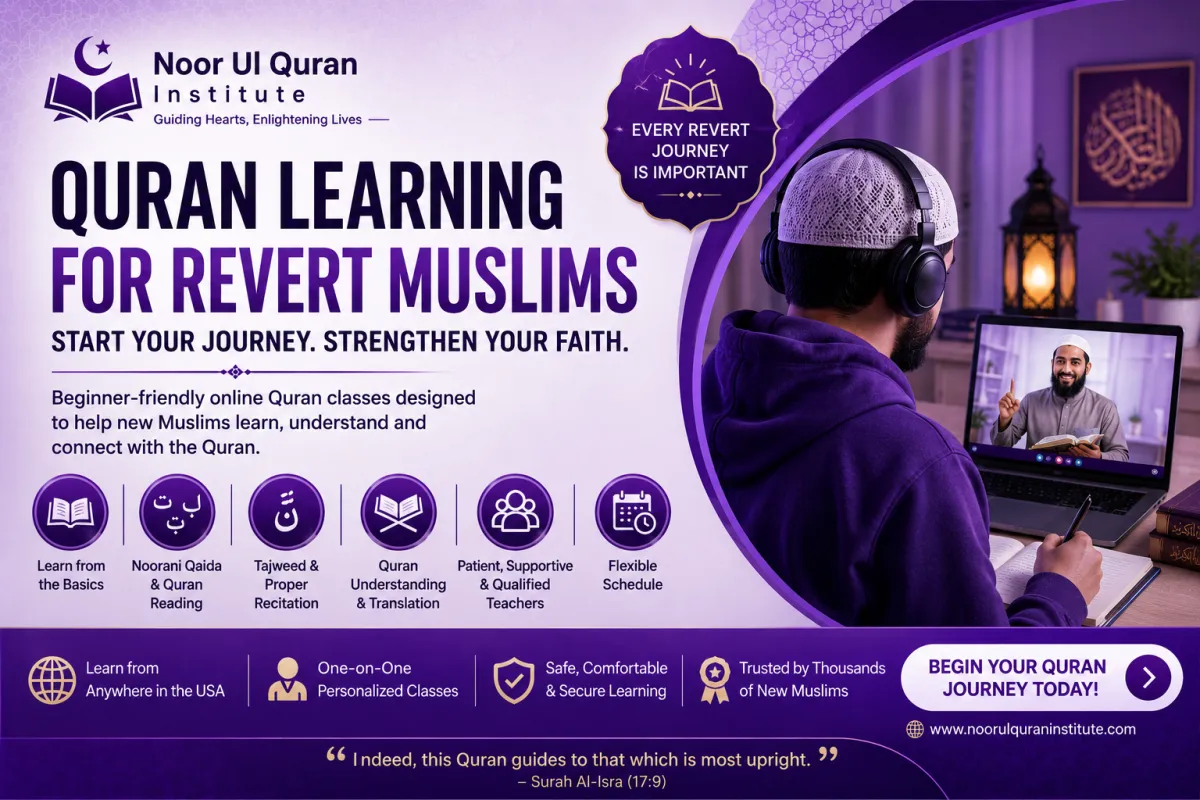
Quran Learning for Revert Muslims: A Beginner-Friendly Path to Quran Education
Beginning Quran learning after accepting Islam can feel exciting, meaningful, and sometimes overwhelming.
A new Muslim may be unfamiliar with Arabic letters, Quranic pronunciation, Tajweed, memorization, or even how to structure a regular Quran study routine.
Quran learning for revert Muslims should therefore begin with the learner's current level rather than assuming previous Quranic knowledge.
Start With the Basics
A new Muslim does not need to already know Arabic to begin.
Learning can start with Arabic letters, pronunciation, basic reading, and foundational Quranic concepts.
A useful first resource is the beginner's guide to online Quran learning, which can help learners understand the basic process.
For someone completely new to Quran reading, how to start learning Quran online can provide another relevant starting point.
Learning Quran Online as a Revert
One reason online Quran learning for Muslims in USA can be valuable is accessibility.
A new Muslim may not live near a mosque or Quran teacher who can provide beginner-level instruction.
Online classes can connect learners with teachers from home.
This also allows learners to study privately if they feel uncomfortable asking basic questions in a traditional classroom environment.
Developing Quran Reading Skills
After learning the basic Arabic letters and sounds, students can gradually develop Quran reading skills.
The existing guide on how to improve Quran reading skills can support this stage.
The goal should be gradual improvement rather than rushing toward advanced material.
Tajweed for New Muslims
Once a learner becomes comfortable reading, Tajweed can help improve recitation.
A teacher can identify pronunciation problems and guide students toward more accurate recitation.
Understanding Quranic Arabic
Some learners eventually want to understand the words they are reciting.
That is where Quranic Arabic can become useful.
Learning Arabic does not need to happen all at once. Students can gradually become familiar with frequently occurring Quranic words and basic Quranic language patterns.
Personalized Support for Reverts
Every revert begins from a different background.
One student may already know Arabic.
Another may have never read Arabic before.
One may want basic Quran reading.
Another may want Tajweed or memorization.
Therefore, online Quran classes for reverts should ideally be flexible enough to accommodate different levels.
Qualified teachers can provide individual feedback and help students progress without feeling rushed.
Building a Long-Term Quran Routine
The ultimate objective is not simply completing a course.
It is developing a lasting relationship with Quranic learning.
A realistic routine might include:
Regular live lessons
Daily Quran reading
Recitation practice
Tajweed revision
Gradual memorization
Quranic vocabulary study
Consistency can make the learning process much more manageable.
Conclusion
New Muslims should never feel that they are "too far behind" to learn the Quran.
With patient instruction, beginner-friendly resources, and a structured learning path, Quran learning for revert Muslims can begin with the simplest foundations and gradually develop into confident Quran reading, Tajweed, understanding, and memorization.