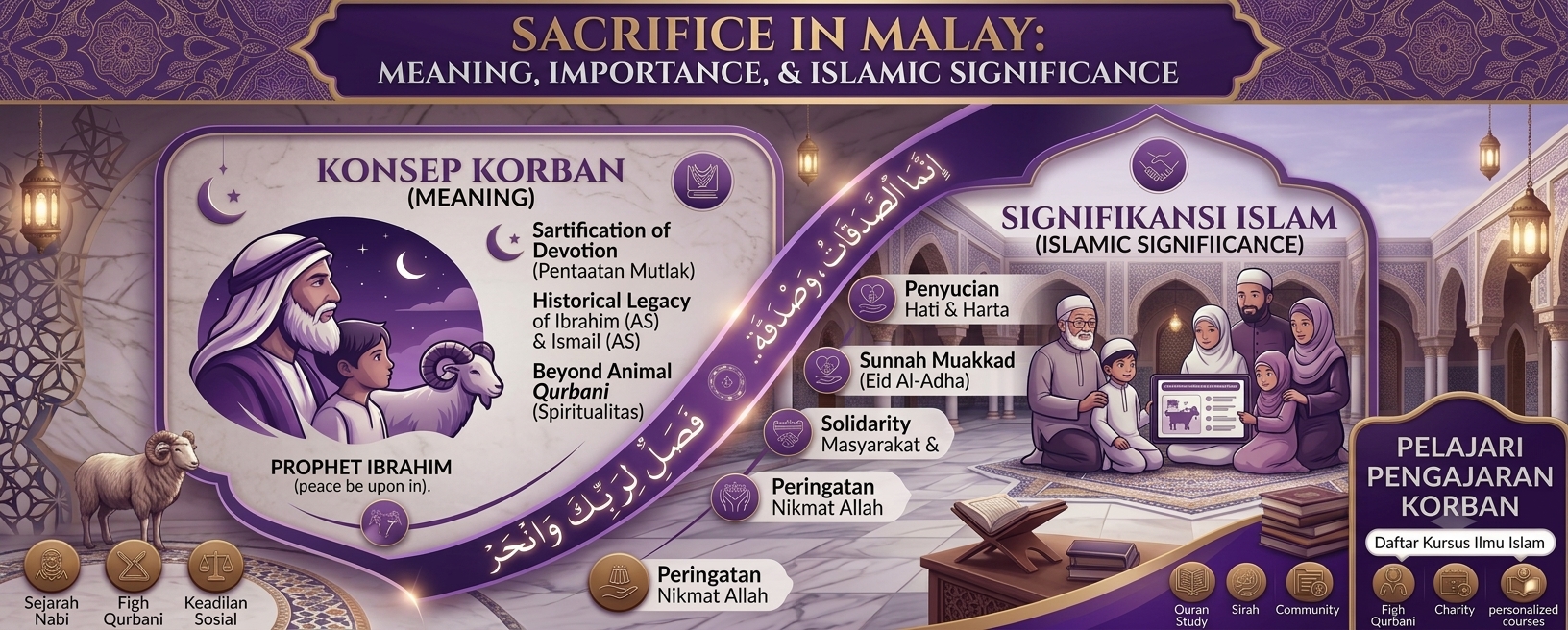
Sacrifice in Malay: Meaning, Importance, and Islamic Significance
The word "sacrifice" in Malay is commonly translated as "pengorbanan." It is a powerful term that represents giving up something valuable for a greater purpose. In Islamic teachings, pengorbanan reflects faith, obedience, patience, and devotion to Allah.
Sacrifice is an important part of a Muslim's life. It teaches believers to prioritize Allah's commands above personal desires and worldly attachments. The concept of pengorbanan can be seen in acts of worship, charity, service to others, and the annual practice of Qurban during Eid-ul-Adha.
Understanding the meaning of sacrifice in Malay helps Muslims appreciate the deeper lessons behind this important Islamic value.
What Does Sacrifice Mean in Malay?
In the Malay language, sacrifice is known as pengorbanan. The word refers to willingly giving up something valuable, whether it is time, wealth, comfort, or personal desires, for a noble cause.
From an Islamic perspective, pengorbanan is not limited to physical offerings. It also includes spiritual sacrifices made to seek Allah's pleasure and strengthen one's faith.
Examples of sacrifice include:
Helping people in need
Donating to charity
Spending time in worship
Giving up bad habits
Supporting family members
Following Islamic teachings despite challenges
These acts reflect the true spirit of pengorbanan in Islam.
The Islamic Meaning of Pengorbanan
Islam teaches that sacrifice is an expression of sincerity and obedience to Allah. One of the greatest examples of pengorbanan is the story of Prophet Ibrahim (AS) and Prophet Ismail (AS).
When Allah tested Prophet Ibrahim (AS) by commanding him to sacrifice his son, both father and son submitted willingly to Allah's will. Before the sacrifice took place, Allah replaced Ismail (AS) with a ram, demonstrating that the true purpose of the test was faith and obedience.
This story continues to inspire Muslims around the world and serves as the foundation of Qurban during Eid-ul-Adha.
Why Sacrifice Is Important in Islam
Pengorbanan plays a vital role in strengthening a believer's character and relationship with Allah.
Through sacrifice, Muslims learn to:
Trust Allah completely
Develop patience and perseverance
Practice generosity
Strengthen their faith
Show gratitude for blessings
Care for others in society
These qualities help Muslims become better individuals and contribute positively to their communities.
The Connection Between Sacrifice and Qurban
One of the most recognized forms of sacrifice in Islam is Qurban, which takes place during Eid-ul-Adha.
Muslims who are financially able sacrifice an animal and distribute the meat among family, friends, and those in need. This act commemorates the devotion of Prophet Ibrahim (AS) and reminds believers of the importance of obedience to Allah.
Qurban teaches several important lessons:
Faith and Submission
Believers learn to trust Allah's wisdom and follow His guidance.
Sharing with Others
The distribution of meat promotes generosity and social responsibility.
Gratitude
Qurban reminds Muslims to appreciate Allah's countless blessings.
Community Unity
Families and communities come together to celebrate and support one another.
Spiritual Benefits of Sacrifice
Sacrifice is not only a physical act but also a spiritual journey that helps believers grow closer to Allah.
Some benefits include:
Strengthening Faith
Making sacrifices for Allah increases trust and reliance on Him.
Developing Taqwa
Sacrifice encourages Muslims to become more conscious of Allah in their daily lives.
Building Compassion
Helping others through acts of sacrifice develops kindness and empathy.
Improving Character
Pengorbanan teaches self-discipline, patience, and responsibility.
Sacrifice in Everyday Life
The concept of pengorbanan extends beyond Eid-ul-Adha. Muslims can practice sacrifice every day through their actions and decisions.
Examples include:
Prioritizing prayer over personal convenience
Supporting parents and family members
Giving charity regularly
Volunteering in community projects
Avoiding actions that displease Allah
These small sacrifices contribute to spiritual growth and personal development.
Why Pengorbanan Matters Today
In today's fast-paced world, many people focus on personal success and material possessions. The Islamic concept of pengorbanan reminds believers to balance worldly goals with spiritual responsibilities.
Sacrifice teaches Muslims to remain grateful, compassionate, and committed to their faith. It helps them build stronger relationships with Allah and contribute positively to society.
The values of sacrifice remain as relevant today as they were centuries ago.
Benefits of Understanding Sacrifice in Malay
Learning about pengorbanan provides several benefits:
Better understanding of Islamic values
Stronger connection with Allah
Increased generosity and kindness
Improved self-discipline
Greater appreciation for blessings
These benefits help Muslims live meaningful and balanced lives.
Final Thoughts
Sacrifice in Malay, or pengorbanan, represents one of the most important values in Islam. It teaches faith, obedience, patience, and generosity. Through the example of Prophet Ibrahim (AS), Muslims learn the importance of trusting Allah and placing His commands above personal desires.
Whether through Qurban, charity, or everyday acts of kindness, sacrifice helps believers strengthen their relationship with Allah and develop qualities that benefit both themselves and their communities.
Learn More About Islamic Values
Deepening your understanding of Islamic teachings can strengthen faith and improve daily life.
Learn the meaning behind Islamic traditions
Explore Quranic stories and lessons
Strengthen your relationship with Allah
Practice values of faith, patience, and generosity