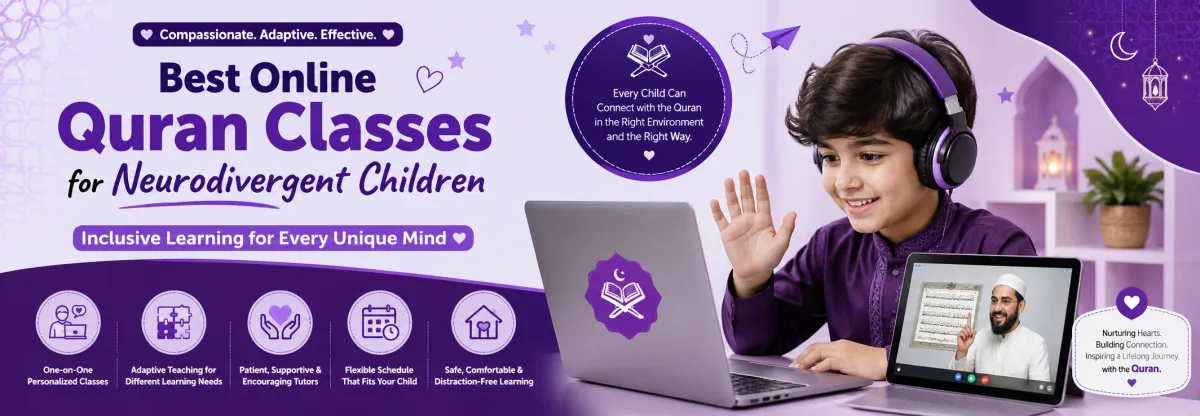
Adaptive Online Quran Classes for Neurodivergent Kids
1. Understanding Neurodivergent Learning in Islamic Education
Neurodivergent children experience learning in unique ways that are not necessarily linear or traditional. This includes children with autism spectrum conditions, sensory processing differences, speech delays, or cognitive learning variations.
In Quran education, this means:
Traditional repetition-only methods may not be effective
Structured group environments may feel overwhelming
Learning pace varies significantly from child to child
Modern Islamic education is evolving toward adaptive and inclusive teaching models that respect these differences rather than trying to normalize them.
2. Why Standard Quran Classes Often Fall Short
Many conventional Quran classes assume a uniform learning style, which creates barriers such as:
Fast-paced recitation expectations
Limited individual attention
Lack of sensory-aware teaching
Fixed lesson structures without flexibility
Minimal emotional or behavioral adaptation
For neurodivergent learners, this can lead to disengagement not due to inability, but due to mismatch in teaching method.
3. Principles of Inclusive Quran Learning Design
Effective online Quran programs for neurodivergent children are built on educational flexibility rather than rigidity.
Key principles include:
Individual Learning Pathways
Each child follows a personalized progression instead of a fixed class syllabus.
Cognitive Load Management
Lessons are structured to avoid overwhelming the learner with too much information at once.
Predictable Learning Structure
Clear, repetitive session formats reduce anxiety and improve comfort.
Multi-Modal Teaching
Combining audio, visual, and interactive cues to support comprehension.
4. Sensory Aware Online Quran Teaching Environment
A major advantage of modern online Quran education is environmental control.
Children benefit from:
Learning in a familiar home space
Reduced noise and visual distractions
Adjustable screen interaction levels
Controlled session intensity (light vs deep focus sessions)
This is especially beneficial for children with sensory sensitivity.
5. Adaptive Teaching Methods Used in Quran Learning
Instead of relying on one rigid method, inclusive Quran programs use layered teaching strategies:
Guided recitation with gentle correction
Visual Quranic breakdowns (ayah segmentation)
Story-based explanation of meanings
Interactive listening and repetition cycles
Flexible memorization techniques based on ability
The goal is not speed it is sustainable understanding and comfort.
6. Emotional Support in Quran Education
Neurodivergent learners often require emotional reassurance as part of the learning process.
Effective Quran tutors focus on:
Encouragement over correction pressure
Calm communication tone
Reduced performance anxiety
Building trust before academic progression
Celebrating micro-achievements consistently
This emotional layer is often what determines long-term success.
7. Role of Parents in the Learning Process
Parents play a critical role in reinforcing learning outcomes.
Best practices include:
Observing lesson patterns and triggers
Maintaining consistent study timing
Avoiding over-pressure outside class sessions
Communicating feedback with tutors
Supporting short revision routines at home
Collaboration between teacher and parent creates stability in learning.
8. Long Term Benefits of Inclusive Quran Education
When neurodivergent children are taught with appropriate methods, outcomes improve significantly:
Stronger retention of Quranic concepts
Improved self-confidence in learning
Better emotional regulation during study
Deeper spiritual connection with learning
Lifelong engagement with Islamic education
Conclusion
Best online Quran classes for neurodivergent children are not defined by speed or rigid structure, but by adaptability, patience, and individualized teaching intelligence.
When education is aligned with how a child naturally learns, the Quran becomes not just accessible but meaningful and lasting.