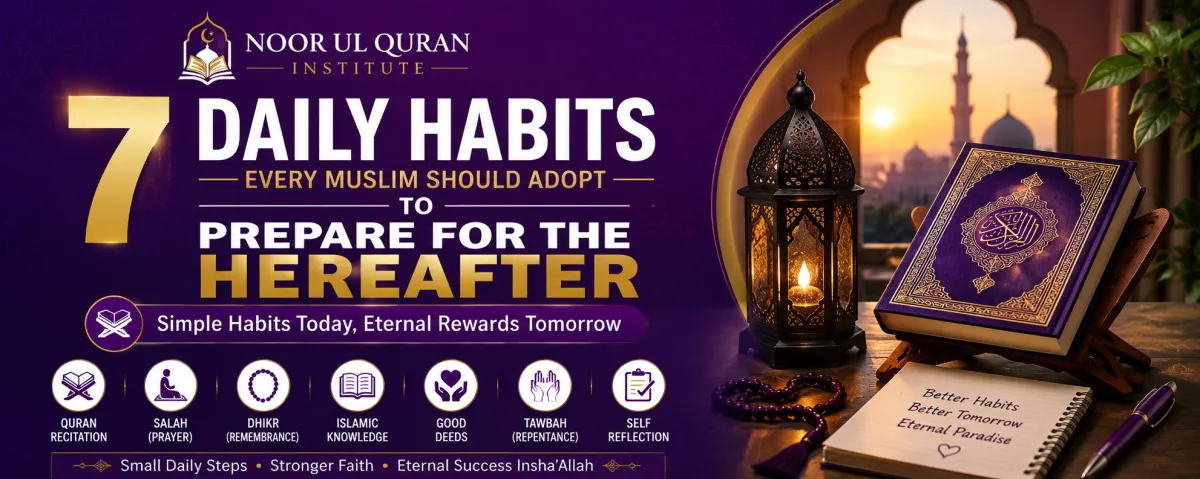
7 Daily Habits Every Muslim Should Adopt to Prepare for the Hereafter
Life in this world is temporary, but the Hereafter is eternal. Islam teaches Muslims to live each day with purpose, sincerity, and awareness that every action contributes to their eternal destination. Building simple yet meaningful habits can help believers strengthen their relationship with Allah and prepare for eternal success.
At Noor ul Quran Institute, we encourage Muslims of all ages to develop daily practices rooted in the Quran and Sunnah. These habits not only improve spiritual well-being but also help believers prepare for the Hereafter while living a balanced and purposeful life.
Why Daily Habits Matter in Islam
Preparing for the Hereafter is not a one-time action. It is a lifelong journey that requires consistency and dedication. Small acts performed regularly can have a significant impact on a believer’s spiritual growth.
The Prophet Muhammad ﷺ said:
“The most beloved deeds to Allah are those that are consistent, even if they are small.”
Daily habits help Muslims strengthen their faith, increase mindfulness, and remain connected to Allah throughout the day.
1. Begin Every Day with Quran Recitation
One of the best ways to strengthen your relationship with Allah is through daily Quran recitation. The Quran is a complete guide for life and provides direction for both this world and the Hereafter.
Benefits of daily Quran recitation include:
Strengthening Iman (faith)
Gaining spiritual peace
Understanding Allah’s guidance
Developing a stronger Islamic mindset
Even dedicating 10 to 15 minutes each day can make a meaningful difference.
If you are looking to improve your understanding of the Quran, structured Quran learning programs can help you build consistency and confidence.
2. Establish the Five Daily Prayers
Salah is one of the most important acts of worship in Islam. Observing the five daily prayers creates discipline and keeps believers connected to Allah throughout the day.
Benefits of regular Salah include:
Spiritual purification
Increased mindfulness
Better self-discipline
Continuous remembrance of Allah
Consistent prayer is an essential part of preparing for the Hereafter.
3. Practice Daily Dhikr and Remembrance of Allah
Dhikr keeps the heart spiritually alive. Simple phrases such as:
SubhanAllah
Alhamdulillah
Allahu Akbar
Astaghfirullah
can be incorporated throughout the day.
Regular remembrance of Allah strengthens faith and increases spiritual awareness.
4. Seek Knowledge of the Quran and Sunnah
Seeking Islamic knowledge is a lifelong responsibility for every Muslim. Learning the Quran and Sunnah helps believers make better decisions and align their lives with Allah's commands.
Ways to increase Quranic knowledge:
Enroll in Quran learning programs
Join Islamic study circles
Learn Tajweed
Study Quranic meanings and interpretations
Knowledge helps Muslims prepare for the Day of Judgment and develop a deeper understanding of their purpose.
5. Perform Small Good Deeds Every Day
Good deeds in Islam are not limited to major acts of worship. Even simple actions can earn tremendous rewards.
Examples include:
Helping parents
Assisting neighbors
Giving Sadaqah
Smiling at others
Sharing beneficial knowledge
These consistent actions contribute to eternal rewards in the Hereafter.
6. Practice Daily Tawbah (Repentance)
No person is free from mistakes. Islam encourages believers to seek forgiveness regularly.
Effective repentance includes:
Acknowledging mistakes
Feeling sincere remorse
Asking Allah for forgiveness
Committing to avoid repeating the mistake
Daily Tawbah purifies the heart and strengthens a believer’s relationship with Allah.
7. End Each Day with Self-Reflection (Muhasabah)
Self-accountability is an important Islamic habit. Taking a few minutes every night to reflect can improve spiritual growth.
Ask yourself:
Did I pray all five Salah today?
Did I remember Allah today?
Did I perform any good deeds?
Did I help someone?
What can I improve tomorrow?
This simple habit creates awareness and keeps believers focused on their ultimate destination.
How Noor ul Quran Institute Helps Muslims Prepare for the Hereafter
Developing these habits becomes easier with proper guidance and support. Noor ul Quran Institute provides structured Quran learning opportunities designed to help Muslims strengthen their faith and build a lifelong connection with Allah.
Our programs focus on:
Quran recitation and Tajweed
Quran memorization
Islamic ethics and values
Spiritual development
Practical implementation of Quranic teachings
By learning and applying Islamic knowledge consistently, Muslims can live purposeful lives and prepare for eternal success.
Internal Resource You May Also Find Helpful
To further understand the bigger picture of preparing for eternal life, read our guide:
An Islamic Guide: How to Prepare for Eternity
This article explains the importance of faith, worship, repentance, Quranic knowledge, and mindful living as essential steps toward preparing for the Hereafter.
Final Thoughts
Preparing for the Hereafter is built upon small, consistent actions performed every day. Strengthening faith in Islam, performing good deeds, seeking Quranic knowledge, and remembering Allah regularly are all investments in eternal success.
The journey toward eternity begins with the choices we make today. By developing these seven daily habits and staying connected to the Quran, Muslims can build a strong foundation for success in both this life and the Hereafter.