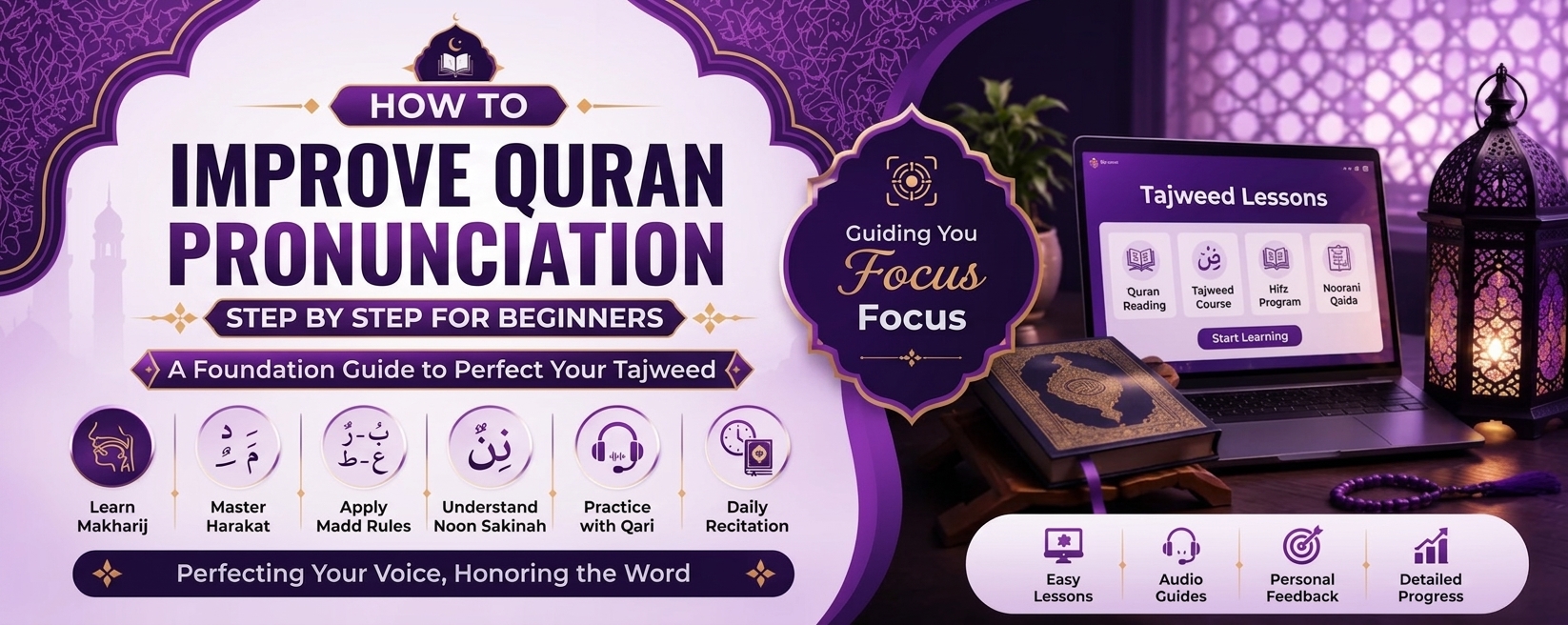
How to Improve Quran Pronunciation Step by Step for Beginners
Learning to read the Quran correctly is an important goal for every Muslim. For beginners, however, Quran pronunciation can sometimes feel difficult, especially when Arabic letters and sounds are unfamiliar. The good news is that with regular practice, proper guidance, and patience, anyone can gradually improve their Quran reading and pronunciation. Correct pronunciation is not only about reading words clearly. It also helps learners recite the Quran according to the proper rules of Arabic pronunciation and Tajweed.
1. Start by Learning the Arabic Letters
The first step toward better Quran pronunciation is becoming familiar with the Arabic alphabet.
Beginners should learn:
The correct sound of each Arabic letter
The shape of letters
How letters change when they appear in different positions
The difference between similar-sounding letters
Some Arabic letters may sound very similar to beginners, so learning them carefully from the beginning can prevent pronunciation problems later.
2. Learn the Correct Makharij
Makharij refers to the places from which Arabic letters are pronounced.
Understanding where a letter comes from in the mouth, throat, tongue, or lips can make a major difference in Quran recitation.
For example, some letters are produced from the throat, while others are pronounced using the tongue or lips. A qualified Quran teacher can help beginners identify and correct these differences.
3. Practice Short Words Before Long Verses
Beginners should not try to perfect long verses immediately.
Instead, start with:
Individual letters
Letter combinations
Short Arabic words
Short Quranic phrases
Complete verses
This gradual approach makes learning less overwhelming and allows students to focus on accuracy.
4. Learn Basic Tajweed Rules
After becoming comfortable with Arabic letters and basic pronunciation, beginners should start learning essential Tajweed rules.
Tajweed helps learners understand how different letters and sounds should be pronounced during Quran recitation.
Important areas include:
Noon Sakinah and Tanween
Meem Sakinah
Madd
Qalqalah
Ghunnah
Rules of stopping and starting
Proper pronunciation of Arabic letters
Learning these rules step by step is much easier than trying to memorize everything at once.
5. Listen to Experienced Quran Reciters
Listening can be a powerful learning tool.
Beginners can listen to a skilled Quran reciter and carefully follow the pronunciation of each word. Repeating a verse after the reciter can help develop familiarity with correct sounds and rhythm.
However, listening should support—not replace—learning from a qualified teacher, because beginners may not notice their own pronunciation mistakes.
6. Practice Difficult Letters Separately
Some Arabic letters can be particularly challenging for new learners.
Instead of avoiding difficult sounds, practice them separately. Repeat the letter slowly, then practice it with different vowel sounds and eventually use it within Quranic words.
Consistent repetition can gradually make difficult sounds easier and more natural.
7. Read Slowly and Clearly
Speed should not be the main goal when learning Quran pronunciation.
Beginners should focus on reading slowly enough to pronounce every letter properly. Once accuracy improves, reading speed can naturally increase.
A slow and accurate recitation is much more beneficial for a learner than rushing through verses while making repeated pronunciation mistakes.
8. Practice Every Day
Regular practice is one of the most important parts of improving Quran pronunciation.
Even a short daily practice session can be useful. For example, a beginner can spend 15–20 minutes practicing:
Arabic letters
Difficult sounds
Tajweed rules
Previously learned verses
New Quranic passages
Daily consistency usually produces better results than practicing for a long time only once or twice a week.
9. Ask a Teacher to Correct Your Mistakes
One of the biggest advantages of learning with a Quran teacher is receiving immediate feedback.
A teacher can identify mistakes that learners may not recognize themselves and explain how to correct them.
This is particularly helpful for:
Makharij
Similar Arabic letters
Tajweed application
Madd
Ghunnah
Qalqalah
Stopping and starting
10. Be Patient With Your Progress
Learning correct Quran pronunciation takes time. Beginners should not become discouraged if certain letters or rules remain difficult.
The goal should be continuous improvement rather than perfection in a few days.
With regular practice, qualified guidance, and sincere effort, pronunciation can gradually become clearer and more accurate.
Conclusion
Improving Quran pronunciation as a beginner is a step-by-step journey. Start with the Arabic alphabet, understand Makharij, learn basic Tajweed, listen carefully to good recitation, practice difficult sounds, and receive feedback from a qualified teacher.
Most importantly, remain consistent. A small amount of focused practice every day can make a significant difference over time.
Learn Quran With Noor Ul Quran Institute
For students who want structured guidance while learning to read and recite the Quran, Noor Ul Quran Institute provides online Quran learning opportunities for children and adults. Its courses include Quran reading, Tajweed, Noorani Qaida, Quran memorization, translation, Tafseer, and other Islamic learning programs.
Learning with a supportive and experienced Quran teacher can make the process easier for beginners and help students build confidence in their recitation. Noor Ul Quran Institute is a useful option for families looking for convenient online Quran education with flexible learning opportunities.