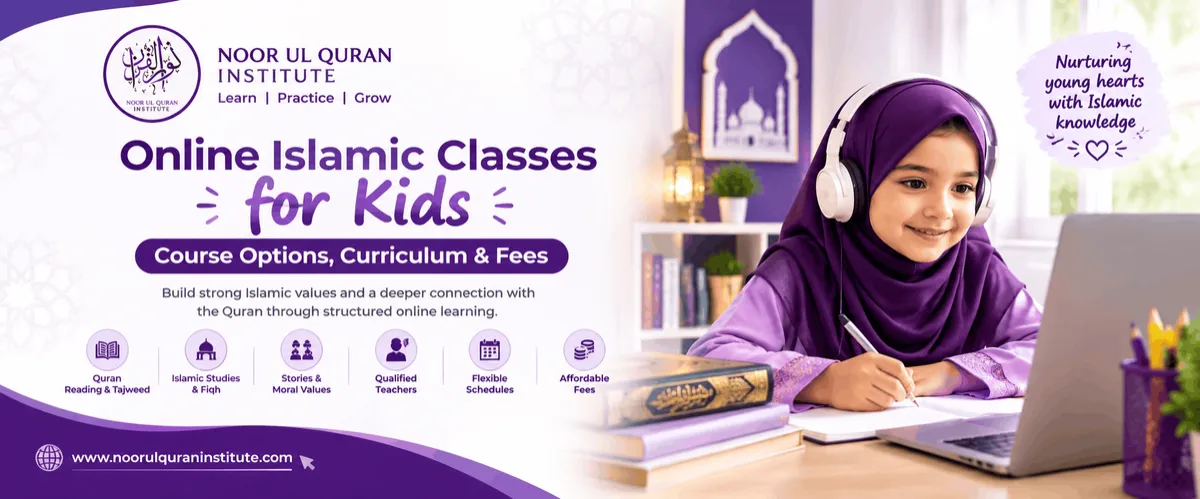
Online Islamic Classes for Kids: Course Options, Curriculum & Fees
Choosing the right online Islamic classes for kids is an important decision for parents who want their children to develop a strong understanding of Islamic teachings from an early age. A structured Islamic education program can help children learn Quran reading, basic Islamic beliefs, daily duas, good manners, and essential religious practices through guided online lessons.
However, selecting a suitable program involves more than comparing course names. Parents should understand the available subjects, curriculum structure, teaching methods, teacher qualifications, class schedules, and monthly fees before making an enrollment decision.
Noor ul Quran Institute offers online Quran and Islamic education options for children at different learning levels. Understanding these course options can help parents identify a program that matches their child's educational requirements.
What Do Online Islamic Classes for Kids Include?
A comprehensive Islamic studies course for kids introduces children to essential Islamic knowledge through age-appropriate lessons and practical learning activities.
Depending on the child's age, knowledge, and learning objectives, online Islamic learning programs may include the following subjects.
1. Basic Islamic Studies
Basic Islamic studies introduce children to the fundamental teachings of Islam and their importance in everyday life.
Common learning topics include:
Introduction to Islam and Islamic beliefs
Five Pillars of Islam
Six Kalimas and their meanings
Islamic manners and etiquettes
Daily duas and supplications
Good character and Islamic values
Basic religious responsibilities
These lessons help children understand important Islamic concepts and develop positive habits through religious education.
2. Noorani Qaida and Quran Reading
Noorani Qaida is a suitable starting point for children who are beginning their Quran learning journey.
A structured beginner-level curriculum introduces Arabic letters, pronunciation, vowel sounds, and basic reading patterns.
Children may learn:
Arabic alphabet recognition
Zabar, Zair, and Pesh
Harakat and Sukoon
Joining Arabic letters
Reading Arabic words
Basic pronunciation techniques
Introduction to Quran reading
Parents looking for beginner Quran lessons can explore Noorani Qaida Online Classes.
3. Quran Recitation and Tajweed
After developing basic Arabic reading skills, children can progress toward Quran recitation and Tajweed.
Online Tajweed classes for kids focus on improving pronunciation and understanding the fundamental rules of Quranic recitation.
The curriculum may cover:
Makharij (articulation points of Arabic letters)
Noon Sakin and Tanween
Madd (elongation)
Qalqalah
Basic Tajweed rules
Correct pronunciation
Quran recitation practice
These lessons help children develop better reading accuracy and confidence when reciting the Holy Quran.
4. Islamic Stories and Lessons from the Prophets
Islamic stories for kids provide meaningful examples of patience, honesty, kindness, courage, and trust in Allah.
Children can learn about the lives of the Prophets, important events in Islamic history, and valuable lessons from the Seerah.
Relevant learning topics include:
Stories of the Prophets
Lessons from the life of Prophet Muhammad (ﷺ)
Islamic history for children
Good manners and kindness
Honesty and respect
Islamic morals and values
Parents can explore Islamic Stories for Kids to support their children's Islamic learning.
5. Basic Fiqh and Hadith Lessons
Basic Fiqh lessons introduce children to everyday Islamic practices and religious responsibilities.
Depending on their learning level, children may study:
Importance of cleanliness in Islam
Basic steps of Wudu
Introduction to Salah
Islamic practices and responsibilities
Everyday manners and etiquettes
Hadith lessons introduce selected teachings of Prophet Muhammad (ﷺ) and explain their relevance to daily life.
Explore Basic Fiqh Lessons for Kids and Hadith Lessons for Kids.
Different Course Options Available in Online Islamic Classes for Kids
Every child has different educational requirements. Some children need beginner-level Quran reading lessons, while others may benefit from structured Islamic studies, Tajweed, or Quran memorization.
Here are some common online Islamic courses for children:
CourseLearning FocusNoorani QaidaArabic letters, pronunciation, and reading basicsQuran ReadingQuran reading fluency and accuracyTajweedCorrect Quranic pronunciation and recitation rulesQuran MemorizationMemorizing Surahs and selected Quranic passagesIslamic StudiesIslamic beliefs, teachings, and valuesBasic FiqhEveryday Islamic practices and responsibilitiesIslamic StoriesStories of the Prophets and Islamic historyHadithTeachings of Prophet Muhammad (ﷺ)
Parents can review the available Online Quran and Islamic Courses to identify a suitable learning option.
How to Choose the Right Islamic Studies Curriculum for Your Child
Choosing an appropriate Islamic studies curriculum for children requires consideration of their age, current knowledge, and learning abilities.
A structured program should introduce essential concepts gradually rather than overwhelming children with too many subjects at once.
Age-Appropriate Learning Materials
Younger children generally benefit from simple explanations, repetition, short activities, and familiar examples.
Older children may be ready for more detailed discussions about Islamic beliefs, religious responsibilities, and the meanings of Quranic teachings.
Beginner and Advanced Learning Levels
A suitable Islamic education program should accommodate children with different levels of understanding.
For example:
Beginners can start with Arabic letters, basic duas, and introductory Islamic beliefs.
Developing learners can study Quran reading, Tajweed, Salah, and basic Fiqh.
More experienced students can progress toward Quran memorization and advanced Islamic studies.
Practical Islamic Education
Islamic education should help children understand how religious teachings connect with everyday activities.
Lessons about honesty, kindness, cleanliness, respect for parents, and responsibility can help children understand the practical importance of Islamic values.
Regular Learning Progress
Parents should look for a structured curriculum with clear learning objectives and opportunities to revise previously covered lessons.
Regular teacher feedback and progress reports can help families understand their child's development and identify areas that require additional practice.
What Should Parents Look for in Online Islamic Classes for Kids?
The quality of teaching plays an important role in a child's Islamic education. Before choosing an online Islamic learning program, parents should evaluate several important factors.
Qualified Islamic Teachers
Teachers should have relevant knowledge of Quranic and Islamic subjects and the ability to explain lessons according to a child's learning level.
One-on-One Learning Options
Individual online Islamic lessons allow teachers to focus on a student's pronunciation, understanding, and learning pace.
This approach can be helpful for children who need additional explanation or personalized guidance.
Male and Female Islamic Tutors
Some families prefer choosing teachers according to their children's comfort and family preferences.
Having male and female teaching options provides greater flexibility when selecting an instructor.
Parents can explore Male Quran Teachers and Female Quran Teachers.
Live Interactive Classes
Live online classes allow children to communicate directly with their teachers, ask questions, practice lessons, and receive corrections during sessions.
Interactive teaching can make Islamic learning more engaging than relying entirely on recorded materials.
Flexible Class Schedules
Morning, evening, and weekend classes can help families coordinate Islamic education with school timings, homework, and other activities.
Parent Communication and Progress Reports
Regular communication helps parents stay informed about lesson completion, student performance, and areas requiring improvement.
Progress updates also make it easier to understand whether the selected curriculum is meeting the child's learning objectives.
Online Islamic Classes for Kids: Understanding Course Fees
Monthly fees are an important consideration when comparing online Islamic classes for kids.
However, the cheapest program is not always the most suitable option. Parents should compare the teaching arrangements, course structure, lesson frequency, and services included in each plan.
Several factors can influence online Islamic classes fees for kids.
Number of Classes Per Week
Some families prefer a few lessons each week, while others may require more frequent sessions.
The number of weekly classes can influence the overall monthly cost.
Individual or Group Lessons
One-on-one Islamic classes provide personalized teacher attention, while group lessons follow a shared learning schedule.
Parents should understand which teaching format is included in their selected package.
Selected Course
Different courses have different learning requirements.
For example, Noorani Qaida, Quran recitation, Tajweed, Quran memorization, and Islamic studies may require different teaching arrangements.
Class Duration and Scheduling
Lesson duration, weekly frequency, and scheduling flexibility are useful factors to consider when comparing available packages.
Teacher and Language Preferences
Teacher availability, preferred teaching language, and individual learning requirements may also influence the available course arrangements.
What Should Be Included in a Monthly Fee?
Before selecting affordable online Islamic classes for kids, parents should check whether the package includes:
Live lessons with an instructor
Individual learning attention
Course-specific teaching materials
Flexible scheduling options
Teacher feedback
Regular progress updates
Trial class availability
For current pricing and available packages, visit the Noor ul Quran Institute Hadiya and Fee Plans page.
How to Compare Online Islamic Learning Programs Before Enrollment
Comparing different online Islamic learning programs can help parents make a more informed decision.
Instead of focusing only on advertised prices, consider the following factors:
Comparison FactorWhat Parents Should CheckCurriculumDoes it cover the required Islamic subjects?Teacher qualificationsDoes the instructor have relevant subject knowledge?Teaching formatAre lessons live and interactive?Personal attentionIs one-on-one learning available?LanguageAre lessons available in a familiar language?SchedulingAre morning, evening, or weekend classes available?Progress trackingAre parents informed about learning progress?Trial classesCan the teaching approach be evaluated before enrollment?FeesAre monthly charges and package details clear?
Evaluating these factors can help families select an Islamic education program that meets their children's learning requirements and fits their budget.
Why Choose Noor ul Quran Institute for Your Child's Islamic Education?
Noor ul Quran Institute provides online Quran and Islamic education for children and learners at different levels.
Its available courses include Noorani Qaida, Quran reading, Tajweed, Quran memorization, Islamic studies, and other specialized learning options.
Parents can consider the following features when evaluating the institute:
Male and female teachers: Families can select an instructor according to their preferences.
Personalized learning: Individual attention helps teachers address students' learning requirements.
Flexible schedules: Morning, evening, and weekend options accommodate different family routines.
Multilingual instruction: Lessons are available in English, Urdu, and Arabic.
Daily progress support: Parents can stay informed about their child's class performance.
Alternate teachers: Teacher alternatives help support learning continuity.
Online learning portal: Students can access their learning resources and class-related information.
Three-day free trial: Families can evaluate the teaching approach before enrollment.
Parents interested in starting their child's Islamic education can explore the Admission Process or register for a Three-Day Free Trial.
How to Enroll Your Child in Online Islamic Classes
Once parents have identified a suitable course, the next step is to understand the enrollment process.
Follow these steps to get started:
Identify learning requirements: Decide whether the child needs Islamic studies, Quran reading, Tajweed, Hifz, or a combination of subjects.
Review available courses: Compare the curriculum and select an appropriate learning level.
Choose teacher preferences: Consider teaching style, language, and male or female teacher options.
Review fee plans: Understand the available packages and weekly class arrangements.
Book a trial class: Evaluate the teaching method and learning arrangements before enrollment.
Complete admission: Share the required student information and discuss a suitable class schedule.
Visit the Noor ul Quran Institute Admission Page to begin the enrollment process.
Frequently Asked Questions About Online Islamic Classes for Kids
What do children learn in online Islamic classes?
Children can learn basic Islamic beliefs, the Five Pillars of Islam, Six Kalimas, daily duas, Islamic manners, Quran reading, Tajweed, basic Fiqh, Hadith, and Islamic stories. The exact curriculum depends on the selected course.
At what age can children start online Islamic classes?
The appropriate starting age depends on a child's readiness, attention span, and learning requirements. Beginner lessons can introduce young learners to Arabic letters and simple Islamic concepts before progressing to structured subjects.
Are online Islamic classes suitable for beginners?
Yes. Beginner-friendly programs can introduce children to Arabic letters, basic Islamic beliefs, daily duas, and introductory Quran reading. Lessons can gradually become more advanced as students develop their knowledge.
Can children learn Quran and Islamic studies together?
Yes. Children can study Quran reading, Tajweed, and foundational Islamic studies through a suitable learning schedule. Parents should select a program that provides sufficient time for each subject.
Do online Islamic classes for kids include live teachers?
Many online Islamic learning programs offer live lessons with instructors. Noor ul Quran Institute provides live classes where students can interact with teachers and receive guidance during lessons.
How much do online Islamic classes for kids cost?
Fees depend on the selected course, number of weekly classes, lesson arrangements, and available packages. Parents can review the current options on the Hadiya and Fee Plans Page.
Are male and female teachers available?
Yes. Noor ul Quran Institute offers male and female teachers, allowing families to select an instructor according to their preferences.
Can parents try online Islamic classes before enrolling?
Yes. Noor ul Quran Institute offers a three-day free trial so families can evaluate the teaching approach and learning arrangements before enrollment.
Conclusion
Choosing the right online Islamic classes for kids requires careful consideration of course options, curriculum structure, teacher qualifications, learning arrangements, and monthly fees.
A suitable Islamic education program should provide age-appropriate lessons, structured learning objectives, opportunities for practice, and regular progress support.
By comparing available Islamic studies courses, teaching methods, and fee plans, parents can make a more informed decision about their children's religious education.
Noor ul Quran Institute offers different Quran and Islamic learning options for children, along with personalized teaching arrangements, flexible schedules, and a three-day free trial.
Explore the available Islamic Courses for Kids and take the first step toward your child's Islamic learning journey.