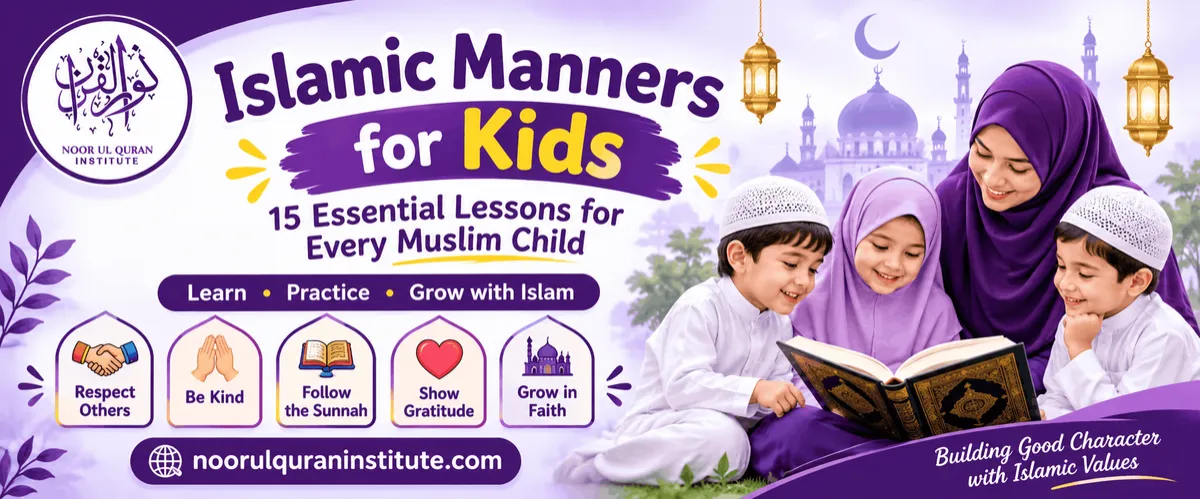
15 Islamic Manners for Kids Every Muslim Child Should Learn in Daily Life
Teaching children good manners is an important part of Islamic upbringing. Children learn how to communicate, respect others, develop good habits, and understand their responsibilities through the behavior they observe at home and in their surroundings. Islam places great importance on good character, kindness, honesty, and respectful behavior from an early age.
Islamic manners for kids are not limited to religious activities. They also include everyday actions such as greeting people, speaking politely, respecting parents, sharing food, helping others, and showing kindness to friends and neighbors.
The Prophet Muhammad ﷺ taught Muslims that good character is an essential part of their faith. Parents can introduce these values through simple daily activities, stories from the Quran and Sunnah, and positive examples.
In this guide, we will explore 15 important Islamic manners every Muslim child should learn and practice in daily life.
Why Are Islamic Manners Important for Kids?
Islamic manners help children develop a strong moral foundation and understand how to treat others with kindness and respect. Learning Adab in Islam from an early age encourages children to make good decisions and develop positive relationships with family members, teachers, friends, and society.
Some important benefits of teaching Islamic etiquette to kids include:
Building good character: Children learn honesty, patience, humility, kindness, and responsibility.
Developing respect: They understand the importance of respecting parents, elders, teachers, and other people.
Following the Sunnah: Children become familiar with the everyday practices of Prophet Muhammad ﷺ.
Strengthening Islamic values: They learn gratitude, forgiveness, compassion, and consideration for others.
Improving social behavior: Good manners help children communicate politely and build healthy friendships.
Developing a connection with Islam: Daily Islamic habits help children understand that Islam guides every aspect of life.
Good manners are an important part of Islamic character development. Parents can make moral education enjoyable by explaining these values through everyday situations.
15 Essential Islamic Manners for Kids to Practice Every Day
Here are 15 basic Islamic manners that parents can teach their children through simple examples and consistent practice.
1. Respect and Obey Parents
Respecting parents is one of the most important Islamic manners for children. Islam teaches children to treat their mother and father with kindness, speak respectfully, and appreciate their efforts.
Allah says in the Quran:
"And your Lord has decreed that you worship not except Him, and to parents, good treatment." (Surah Al-Isra 17:23)
Children can practice this Islamic value by:
Speaking politely to their parents.
Listening when their parents give good advice.
Helping with small household responsibilities.
Avoiding shouting or using disrespectful words.
Showing appreciation for their parents' care and sacrifices.
Parents should also explain that respecting parents does not mean following instructions that go against Islamic teachings. Children can learn to express disagreement respectfully.
2. Always Speak the Truth
Honesty is an important part of good character in Islam. Children should understand that telling the truth builds trust and helps them develop strong relationships with others.
Teach children to:
Avoid lying, even when they make mistakes.
Be honest with parents and teachers.
Return things that do not belong to them.
Admit their mistakes instead of blaming others.
Keep promises whenever possible.
The Prophet Muhammad ﷺ encouraged truthfulness and taught that it leads to righteousness (Sahih al-Bukhari 6094; Sahih Muslim 2607).
Parents can encourage honesty by creating a safe environment where children feel comfortable admitting their mistakes.
Parents who want to strengthen their children's Islamic knowledge can explore the best Islamic course for kids, where children learn essential Islamic values, good manners, daily Duas, and religious practices through structured lessons.
3. Greet Others with Assalamu Alaikum
Saying Assalamu Alaikum is a beautiful Islamic greeting that spreads peace and goodwill among Muslims.
Children should learn to greet family members, relatives, teachers, and other Muslims when they meet them.
Some simple greeting habits include:
Saying Assalamu Alaikum when entering the home.
Returning the Islamic greeting politely.
Greeting relatives when visiting them.
Smiling and speaking kindly to others.
The Quran encourages Muslims to return greetings with an equal or better greeting (Surah An-Nisa 4:86).
Teaching children this small habit helps them develop confidence and positive social behavior.
4. Eat and Drink with Islamic Etiquette
Eating and drinking are everyday activities where children can practice the Sunnah of Prophet Muhammad ﷺ.
The Prophet ﷺ taught:
"Say Bismillah, eat with your right hand, and eat from what is in front of you." (Sahih al-Bukhari 5376; Sahih Muslim 2022)
Parents can teach the following eating manners:
Say Bismillah before eating.
Eat with the right hand.
Eat from the food in front of you.
Avoid wasting food.
Share food with others.
Say Alhamdulillah after eating.
These simple practices help children develop gratitude, discipline, and awareness of Islamic etiquette.
5. Respect Elders and Be Kind to Younger Children
Respect and kindness are important Islamic values for children. Kids should understand that everyone deserves to be treated with dignity, regardless of age or background.
Teach children to:
Speak respectfully to grandparents and older relatives.
Listen when elders are speaking.
Help younger siblings.
Avoid making fun of younger children.
Show patience when someone needs help.
The Prophet Muhammad ﷺ taught that those who do not show mercy to the young and respect to the elders are not following his way (Jami at-Tirmidhi 1919).
These lessons help children develop compassion and positive relationships with people of different ages.
6. Keep Yourself and Your Surroundings Clean
Cleanliness is an important part of Islamic teachings. Children should learn to maintain personal hygiene and keep their surroundings neat.
Some useful daily habits include:
Washing hands before meals.
Brushing teeth regularly.
Wearing clean clothes.
Keeping their bedroom organized.
Putting rubbish in the dustbin.
Keeping school and study materials tidy.
Parents can explain that cleanliness is a valued part of Muslim life and encourage children to take responsibility for their personal hygiene.
7. Speak Politely and Avoid Bad Language
The way children speak reflects their character. Islam encourages kind, respectful, and thoughtful communication.
Children should learn to:
Use polite words when speaking.
Avoid shouting at others.
Never insult or hurt someone's feelings.
Listen without interrupting.
Avoid mocking other people.
Say please, thank you, and sorry when appropriate.
Allah reminds believers in Surah Al-Isra (17:53) to speak in the best manner.
Parents can teach children that kind words can make others feel respected and appreciated.
8. Share with Others and Help People in Need
Sharing is one of the easiest ways to teach kindness and generosity to children.
Islam encourages Muslims to care for others and support people who need assistance.
Children can practice sharing by:
Sharing toys with siblings and friends.
Offering food to others.
Helping classmates with their schoolwork.
Giving away things they no longer need.
Helping parents with small household tasks.
The Prophet Muhammad ﷺ encouraged believers to love for others what they love for themselves (Sahih al-Bukhari 13; Sahih Muslim 45).
These good habits teach children generosity and consideration for others.
9. Respect Teachers and Follow Good Advice
Teachers play an important role in children's education and personal development. Islamic manners encourage children to show respect, listen carefully, and appreciate those who teach them beneficial knowledge.
Teach children to:
Greet teachers respectfully.
Listen during lessons.
Avoid interrupting the teacher.
Complete assigned work honestly.
Ask questions politely.
Thank teachers for their guidance.
Respecting teachers helps children develop discipline and a positive attitude toward learning.
10. Practice Patience and Control Anger
Patience, or Sabr, is an important Islamic quality that children should learn from an early age.
Children sometimes become upset when they lose a game, disagree with friends, or do not get what they want. Parents can use these situations to teach patience and emotional control.
Encourage children to:
Take a moment before responding when angry.
Avoid hitting or hurting others.
Wait patiently for their turn.
Accept that they cannot always win.
Forgive others when appropriate.
Ask Allah for help when facing difficulties.
Allah praises those who control their anger and forgive others in Surah Aal-e-Imran (3:134).
11. Be Humble and Avoid Showing Off
Humility is an important part of Islamic character development. Children should learn that having more toys, better clothes, or higher marks does not make anyone better than others.
Parents can teach humility through simple lessons:
Avoid bragging about personal achievements.
Do not make fun of people who have less.
Appreciate what Allah has provided.
Treat everyone with kindness.
Celebrate other people's success.
In Surah Luqman (31:18–19), Allah teaches humility and moderation in behavior and speech.
Children who develop humility are more likely to build respectful and meaningful relationships.
12. Respect Neighbors and Visitors
Islam teaches Muslims to treat neighbors and guests with kindness and consideration.
Children should understand that good manners extend beyond the home and include people living nearby.
Teach them to:
Greet neighbors politely.
Avoid making unnecessary noise.
Respect other people's property.
Welcome visitors with kindness.
Avoid disturbing others.
Offer help when someone needs it.
Surah An-Nisa (4:36) emphasizes kindness toward neighbors and people around us.
These practices help children understand their responsibilities toward their community.
13. Respect the Quran and Islamic Teachings
Children should learn to treat the Holy Quran with respect and develop a positive relationship with its teachings.
Parents can encourage the following habits:
Keep the Quran in a clean and respectful place.
Learn how to handle the Quran appropriately.
Listen attentively during Quran recitation.
Practice reading Quran regularly.
Learn basic Islamic teachings.
Understand the meanings of simple Quranic verses.
Children can also benefit from learning Noorani Qaida, basic Tajweed rules, and short Surahs with their meanings.
The purpose is not only to help children read the Quran but also to encourage them to understand and practice its guidance.
14. Be Grateful and Say Alhamdulillah
Gratitude, or Shukr, is an important Islamic value that helps children appreciate the blessings of Allah.
Parents can teach children to recognize blessings in everyday life, including food, family, health, education, and friendship.
Encourage them to:
Say Alhamdulillah after receiving something good.
Thank Allah for everyday blessings.
Appreciate what their parents provide.
Avoid constantly complaining.
Express gratitude when someone helps them.
Share their blessings with others.
Allah says in Surah Ibrahim (14:7) that if people are grateful, He will increase them in favor.
Teaching gratitude helps children develop a positive attitude and appreciate even the little things in life.
15. Be Kind to Animals and All Living Creatures
Kindness is not limited to family members and friends. Islam also teaches compassion toward animals and other living creatures.
Children should understand that animals deserve gentle and responsible treatment.
Teach them to:
Never hurt animals for entertainment.
Avoid throwing stones at birds or other animals.
Provide water or food to animals when appropriate.
Treat pets responsibly.
Respect nature and avoid unnecessary harm.
The Prophet Muhammad ﷺ taught that showing kindness to living creatures brings reward (Sahih al-Bukhari 2363; Sahih Muslim 2244).
This lesson helps children develop compassion and responsibility toward the world around them.
How Can Parents Teach Islamic Manners to Kids at Home?
Teaching Islamic manners to children requires patience, consistency, and positive encouragement. Children usually learn faster when they see good behavior being practiced by their parents and other family members.
Here are some practical ways to make Islamic tarbiyah part of everyday family life.
Lead by Example
Children often copy the behavior they observe. Parents should practice honesty, patience, kindness, and respectful communication in front of their children.
Teach Through Islamic Stories
Share age-appropriate stories about Prophet Muhammad ﷺ and other Prophets. Explain the lessons of kindness, honesty, forgiveness, and patience through simple examples.
Introduce One Good Habit at a Time
Avoid teaching too many manners at once. Start with simple habits such as saying Bismillah before eating, greeting others with Salam, and speaking politely.
Use Positive Encouragement
Appreciate children when they demonstrate good behavior. Positive encouragement helps them understand the importance of practicing Islamic manners regularly.
Make Learning Interactive
Use short activities, role-playing, Islamic quizzes, and daily challenges to make learning enjoyable.
Connect Manners with Quran and Sunnah
Explain the Islamic teachings behind different manners. When children understand why a habit matters, they can develop a stronger connection with Islamic values.
Daily Islamic Manners Checklist for Kids
Parents can use this simple checklist to encourage children to practice good manners consistently.
Daily habitPracticeSay Bismillah before eatingDailyEat with the right handAt mealtimesGreet others with SalamWhen meeting MuslimsSpeak politelyThroughout the dayRespect parentsEvery dayTell the truthAlwaysKeep surroundings cleanDailyShare with othersWhenever possibleSay AlhamdulillahWhen expressing gratitudeHelp someoneWhenever possible
Parents can turn these activities into a weekly Islamic manners challenge and appreciate children for their efforts.
Common Mistakes Parents Should Avoid When Teaching Islamic Manners
While teaching good manners in Islam, parents should remember that children need time and practice to develop positive habits.
Some common mistakes to avoid include:
Expecting immediate results: Children may need repeated guidance before developing a habit.
Using harsh words: Shouting and insulting children can negatively affect their confidence.
Teaching without examples: Children learn better when parents practice the same manners.
Overloading children with lessons: Introduce a few simple manners at a time.
Ignoring small improvements: Appreciate children when they make an effort to behave better.
Focusing only on memorization: Help children understand the meaning and purpose behind Islamic teachings.
A gentle and consistent approach makes Islamic character building more meaningful and effective.
Frequently Asked Questions About Islamic Manners for Kids
1. What are Islamic manners for kids?
Islamic manners for kids are good behaviors and habits taught by the Quran and Sunnah. They include respecting parents, speaking politely, telling the truth, sharing with others, showing kindness, and following the teachings of Prophet Muhammad ﷺ.
2. What are the five good manners in Islam for children?
Five important Islamic manners include:
Respecting parents and elders.
Speaking the truth.
Greeting others with Assalamu Alaikum.
Being kind and helpful.
Practicing patience and gratitude.
3. At what age should children learn Islamic manners?
Parents can introduce simple Islamic manners during early childhood. Basic habits such as saying Bismillah, greeting family members, sharing toys, and speaking politely can be taught through everyday activities.
4. How can I teach my child good manners in Islam?
Parents can teach good manners through positive examples, Islamic stories, daily activities, Quranic lessons, and gentle reminders. Practicing one habit at a time can make learning easier.
5. What is the importance of Adab in Islam?
Adab refers to proper manners, etiquette, and respectful behavior. It helps Muslims develop good character, maintain healthy relationships, and follow Islamic teachings in everyday life.
6. How can Quran learning help children develop good character?
Quran learning introduces children to Islamic teachings, moral values, and guidance for daily life. Understanding Quranic lessons can encourage honesty, kindness, patience, respect, and gratitude.
Conclusion
Teaching Islamic manners for kids is an important responsibility that helps parents build a strong foundation of faith, character, and good behavior. From respecting parents and speaking politely to sharing with others and showing kindness to animals, these everyday habits help children understand how Islam guides their lives.
Parents should remember that Islamic tarbiyah is a continuous process. Small lessons, positive examples, Quranic guidance, and regular encouragement can help children develop good manners naturally.
By introducing these 15 Islamic manners and connecting them with the Quran and Sunnah, parents can encourage their children to grow into respectful, responsible, and compassionate Muslims.
At Noor ul Quran Institute, children can also develop their understanding of Islam through structured Quran learning, Tajweed, Noorani Qaida, and Islamic Studies lessons with qualified teachers. A strong connection with the Quran can help children understand and practice Islamic values in their everyday lives.