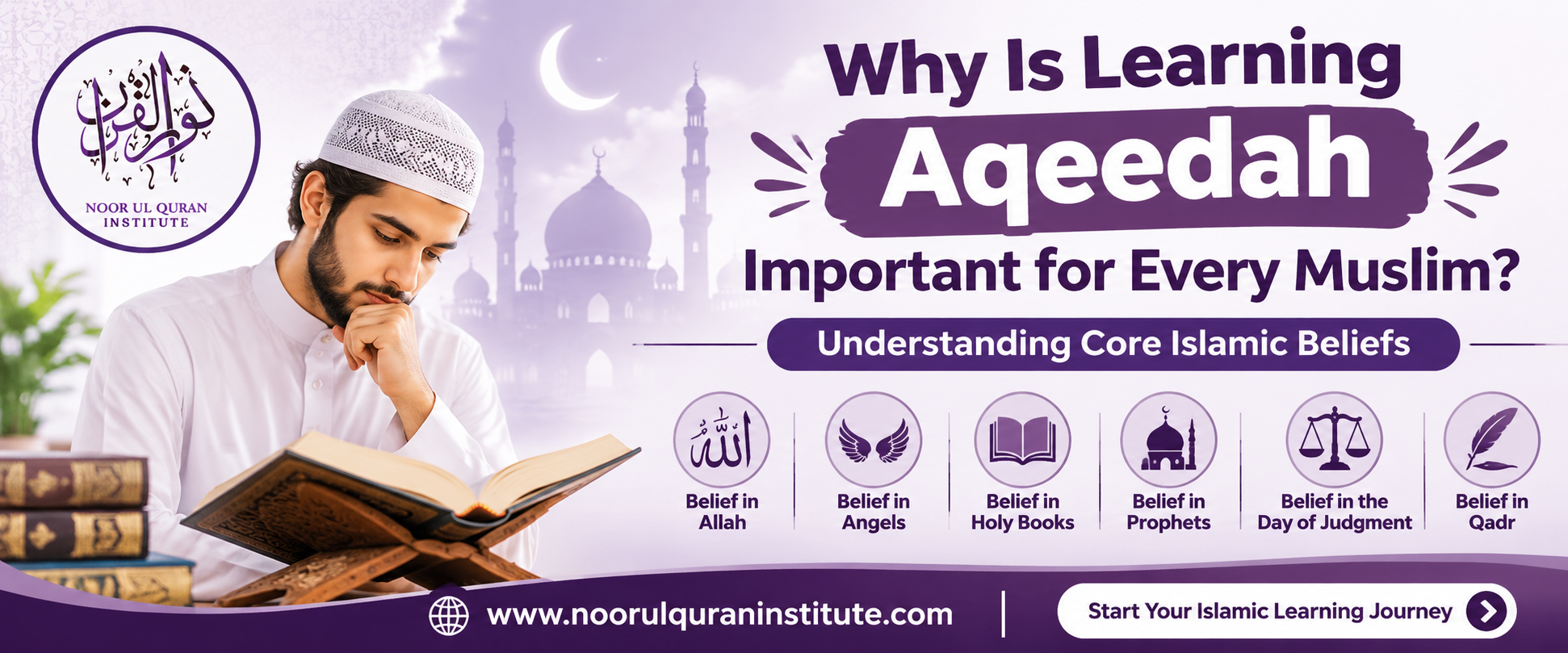
Why Is Learning Aqeedah Important for Every Muslim? Understanding Core Islamic Beliefs
Every Muslim needs a clear understanding of the beliefs that form the foundation of Islam. These beliefs influence how a person worships Allah, understands the purpose of life, makes decisions, and prepares for the Hereafter. This fundamental knowledge is known as Aqeedah (Islamic Creed).
Learning Aqeedah is not simply about memorizing religious definitions. It involves developing a sound understanding of Islamic beliefs, recognizing the Oneness of Allah, accepting His guidance, and building faith based on the Quran and authentic Sunnah.
Whether someone is a new Muslim, a beginner in Islamic education, or an individual seeking to strengthen existing knowledge, studying Aqeedah helps establish a stronger foundation for practicing Islam.
Understanding the importance of Aqeedah in Islam also helps Muslims distinguish between fundamental beliefs and practical religious responsibilities. It provides a framework for understanding faith and applying Islamic teachings in everyday life.
What Is Aqeedah in Islam?
Aqeedah refers to the firmly held beliefs that a Muslim accepts with conviction. The word comes from an Arabic root associated with binding or firmly establishing something.
In Islamic terminology, Aqeedah describes the essential beliefs concerning Allah, His attributes, His messengers, revelation, the unseen, and the Hereafter.
A sound Islamic Aqeedah is based on the guidance of the Quran and authentic teachings of Prophet Muhammad ﷺ.
It provides the foundation upon which a Muslim understands religion and develops a relationship with Allah.
Some important concepts connected with Islamic Aqeedah include:
Tawheed: Believing in the Oneness of Allah and worshipping Him alone.
Iman: Having faith in the fundamental truths of Islam.
Risalah: Believing in the messengers sent by Allah.
Al-Ghayb: Believing in the unseen realities explained through revelation.
Akhirah: Believing in the Hereafter and accountability.
Qadr: Believing in Allah's divine decree.
These concepts form part of the broader foundation of Islamic faith. For a detailed explanation of the six articles of faith, read our guide on What Are the 6 Pillars of Iman in Islam?.
Why Is Learning Aqeedah Important for Every Muslim?
Learning Aqeedah is essential because beliefs influence a person's understanding of Islam and approach to religious responsibilities. Without a proper foundation of Islamic knowledge, it can become difficult to understand why Muslims worship Allah, follow His guidance, and remain accountable for their actions.
Here are some important reasons every Muslim should develop an understanding of Aqeedah.
1. It Establishes a Strong Foundation of Faith
Aqeedah provides the foundation upon which Islamic faith is established. Understanding the essential beliefs of Islam helps Muslims recognize their relationship with Allah and the purpose of following His guidance.
When a person learns about Tawheed, the Oneness of Allah, worship becomes more meaningful because its purpose is understood.
Allah says in the Quran:
"And I did not create the jinn and mankind except to worship Me."
(Surah Adh-Dhariyat 51:56)
This verse highlights the purpose of human creation and the importance of worshipping Allah.
Learning Aqeedah helps Muslims understand the beliefs behind their religious practices instead of treating worship as a collection of disconnected activities.
2. It Strengthens Iman and Trust in Allah
One of the important benefits of learning Aqeedah is developing a deeper understanding of Iman.
Faith influences how Muslims respond to happiness, difficulties, uncertainty, and everyday responsibilities. A sound understanding of Islamic beliefs encourages patience, gratitude, sincerity, and trust in Allah.
For example:
During difficulties, belief in Allah's wisdom encourages patience.
During success, faith reminds Muslims to remain grateful.
When facing uncertainty, Tawakkul encourages reliance upon Allah.
When making decisions, Islamic principles provide moral direction.
Learning about the foundations of faith helps Muslims understand these concepts through authentic Islamic teachings.
3. It Helps Muslims Understand Tawheed Correctly
Tawheed is the belief in the absolute Oneness of Allah. It is a central concept in Islamic Aqeedah and establishes that Allah alone deserves worship.
Understanding Tawheed helps Muslims recognize the importance of directing their prayers, supplications, hopes, and acts of worship toward Allah.
The Quran explains:
"Say, He is Allah, [who is] One."
(Surah Al-Ikhlas 112:1)
Studying Tawheed also helps Muslims understand that Allah is unique and has no partner.
A proper understanding of this fundamental belief encourages sincerity in worship and helps believers recognize the central place of Allah in their lives.
4. It Protects Against Misunderstandings About Islamic Beliefs
Muslims encounter religious information through books, social media, online discussions, family conversations, and different educational sources.
However, not every explanation accurately represents authentic Islamic teachings.
Learning Aqeedah from reliable sources helps Muslims evaluate religious information more carefully and recognize the importance of evidence from the Quran and Sunnah.
It can help learners:
Identify misconceptions about fundamental Islamic beliefs.
Understand religious concepts within their proper context.
Recognize the importance of authentic Islamic sources.
Avoid accepting religious claims without proper knowledge.
Ask qualified scholars when facing difficult theological questions.
The objective is not to argue with others but to develop a clear, informed understanding of Islamic faith.
5. It Gives Muslims a Clear Understanding of Their Purpose
Aqeedah helps Muslims understand why they were created and what responsibilities come with their faith.
Islam teaches that worldly life is temporary and that human beings will return to Allah.
Belief in the Hereafter encourages Muslims to consider the consequences of their actions and make choices that reflect their religious responsibilities.
This understanding influences everyday behavior, including:
Being honest in personal and professional dealings.
Avoiding injustice and harmful actions.
Fulfilling responsibilities toward family and society.
Practicing patience during difficult circumstances.
Remembering accountability before Allah.
A strong foundation of Islamic beliefs helps connect everyday decisions with the larger purpose of life.
6. It Improves Understanding of Worship and Religious Practices
Islamic worship is closely connected with belief. Salah, fasting, Zakat, and other acts of worship become more meaningful when Muslims understand the faith and intentions behind them.
Aqeedah explains the fundamental beliefs that guide a Muslim's relationship with Allah, while Fiqh helps explain the practical rulings governing religious actions.
For example:
Aqeedah establishes belief in Allah.
Fiqh explains the practical requirements of Salah.
Aqeedah develops belief in divine accountability.
Fiqh explains religious responsibilities such as fasting and Zakat.
Both areas of Islamic knowledge are important, but they serve different educational purposes.
Muslims can explore our Complete Overview of Fiqh: Worship, Dealings and Social Laws to understand practical Islamic rulings in greater detail.
7. It Encourages Better Character and Moral Responsibility
Islamic beliefs influence personal character and relationships with other people.
Belief in Allah's knowledge and accountability reminds Muslims that their words, intentions, and actions matter.
Similarly, belief in the Hereafter encourages fairness, honesty, compassion, and responsibility.
A Muslim who understands these principles can work toward developing positive qualities such as:
Sabr: Patience during difficulties.
Shukr: Gratitude for Allah's blessings.
Tawakkul: Reliance upon Allah.
Ikhlas: Sincerity in worship and actions.
Amanah: Trustworthiness and fulfilling responsibilities.
Adl: Justice and fairness.
These qualities demonstrate how Islamic beliefs can influence practical behavior rather than remaining limited to theoretical knowledge.
What Are the Main Foundations of Islamic Aqeedah?
Understanding the foundations of Islamic Aqeedah helps learners organize their knowledge and recognize the essential subjects that require attention.
The following concepts provide a useful starting point.
1. Understanding the Oneness of Allah
Tawheed is the central foundation of Islamic belief. Muslims believe that Allah is the Creator, Sustainer, and Lord of everything.
Learning this concept involves understanding Allah's Oneness, His unique attributes, and His exclusive right to be worshipped.
2. Understanding the Role of Prophets and Messengers
Allah sent prophets and messengers to guide humanity toward the truth.
Muslims believe in all the prophets sent by Allah and accept Prophet Muhammad ﷺ as the final messenger.
Learning about their role helps Muslims understand how divine guidance was communicated to humanity.
3. Believing in Revelation and Divine Guidance
Allah revealed guidance through His messengers. Muslims believe in the original divine revelations and accept the Quran as the final revelation.
Understanding this foundation encourages Muslims to study the Quran and learn its teachings.
Students can explore our Online Quran Translation Classes to develop a better understanding of Quranic meanings.
4. Understanding the Unseen
Islamic Aqeedah includes belief in realities that human beings cannot directly observe.
These include angels, divine revelation, and matters of the Hereafter.
Learning about the unseen helps Muslims understand that Islamic faith is based on the guidance revealed by Allah rather than only what can be experienced through the physical senses.
5. Believing in Accountability and the Hereafter
Belief in the Hereafter reminds Muslims that worldly life is not permanent.
Every individual is accountable for their actions, and this belief encourages responsible behavior, sincere repentance, and preparation for the next life.
For further spiritual guidance, explore How to Prepare for Eternity in Islam.
What Is the Difference Between Aqeedah, Iman, and Fiqh?
Aqeedah, Iman, and Fiqh are closely connected areas of Islamic knowledge, but they have different meanings.
Understanding these differences helps learners recognize what each subject teaches.
Islamic ConceptMeaningMain FocusAqeedahIslamic creed and fundamental beliefsWhat Muslims believeImanFaith and convictionBelief in the essential truths of IslamFiqhIslamic jurisprudencePractical religious rulings and responsibilities
For example, believing that Allah alone deserves worship is part of Aqeedah. Having faith in that belief is part of Iman. Learning how to perform Salah according to Islamic rulings falls under Fiqh.
These subjects complement one another and help Muslims develop a more complete understanding of their religion.
How Can Beginners Start Learning Aqeedah?
Learning Islamic Aqeedah does not need to feel complicated. Beginners can develop their understanding gradually through structured lessons, reliable resources, and guidance from qualified Islamic teachers.
Here are practical steps to begin.
1. Start With the Basic Islamic Beliefs
Begin by understanding the fundamental beliefs of Islam, including Tawheed, Iman, revelation, prophethood, and the Hereafter.
Learn one concept at a time and make sure its meaning is understood before moving to more advanced subjects.
2. Study the Quran With Meaning
The Quran is the primary source of Islamic guidance.
Reading its translation and studying relevant explanations helps Muslims understand the beliefs, responsibilities, and principles taught through revelation.
Students interested in deeper Quranic understanding can explore Online Quran Tafseer Classes.
3. Learn From Authentic Islamic Sources
Choose educational resources that explain Islamic beliefs through the Quran and authentic Sunnah.
Avoid relying entirely on short social media posts or discussions without checking their religious sources.
When a subject involves complex theological differences, consult a qualified and knowledgeable Islamic scholar.
4. Ask Questions and Clarify Difficult Concepts
Beginners may have questions about Tawheed, divine decree, the unseen, and other fundamental beliefs.
Asking questions is a valuable part of learning. A qualified teacher can explain difficult concepts in an organized and understandable manner.
5. Maintain Consistency in Islamic Learning
Learning about faith should be a continuous process.
Set aside time for reading, listening to authentic Islamic lessons, reviewing important concepts, and reflecting on their practical meaning.
Consistent learning helps develop a stronger understanding over time.
Why Should Adults and New Muslims Learn Aqeedah?
Aqeedah is important for Muslims at every stage of life. Adults and new Muslims may particularly benefit from structured learning because they may be developing their understanding of Islamic beliefs or revisiting fundamental concepts.
For new Muslims, learning Aqeedah provides an introduction to the essential beliefs that define Islamic faith.
For adults, it offers an opportunity to strengthen existing knowledge, clarify misunderstandings, and develop a more informed approach to religious practice.
A structured learning approach can include:
Understanding the meaning of Tawheed.
Studying the foundations of Iman.
Learning about the Quran and Sunnah as sources of guidance.
Understanding the purpose of worship.
Developing awareness of the Hereafter.
Connecting Islamic beliefs with everyday responsibilities.
Adults who want to strengthen their Quranic knowledge can also explore Online Quran Classes for Adults.
How Does Learning Aqeedah Influence Everyday Muslim Life?
The importance of Aqeedah becomes clearer when its principles are connected with everyday experiences.
Islamic beliefs influence personal decisions, relationships, worship, and responses to different situations.
Consider these examples:
Everyday SituationRelated Islamic BeliefPractical InfluenceFacing a difficult situationBelief in QadrEncourages patience and trust in AllahMaking an important decisionAccountability before AllahEncourages responsible choicesPerforming SalahTawheedReinforces sincere worship of AllahReceiving a blessingBelief in AllahEncourages gratitudeDealing with othersIslamic moral principlesEncourages honesty and fairnessFacing uncertaintyTawakkulEncourages reliance upon Allah while making sincere efforts
These examples demonstrate that Islamic Aqeedah is not limited to theoretical discussions. Its principles influence how Muslims understand their responsibilities and approach life.
Frequently Asked Questions About Learning Aqeedah
1. What is the main purpose of learning Aqeedah?
The main purpose of learning Aqeedah is to understand and establish the fundamental beliefs of Islam. It helps Muslims develop a sound understanding of Allah, revelation, prophethood, the unseen, and the Hereafter.
2. Is learning Aqeedah compulsory for every Muslim?
Every Muslim is responsible for learning the essential beliefs required for sound faith. The level of knowledge needed depends on the subject and individual circumstances. More advanced theological studies may require additional guidance from qualified scholars.
3. What are the basic topics covered in Islamic Aqeedah?
Basic Aqeedah studies generally include Tawheed, belief in Allah, angels, divine books, prophets, the Day of Judgment, and Qadr. These subjects establish the foundations of Islamic faith.
4. What is the difference between Aqeedah and Tawheed?
Tawheed refers specifically to the Oneness of Allah, while Aqeedah covers a broader range of fundamental Islamic beliefs. Tawheed is one of the central subjects within Islamic Aqeedah.
5. Can beginners learn Aqeedah without advanced Islamic knowledge?
Yes. Beginners can start with simple explanations of fundamental Islamic beliefs using reliable educational resources. Gradual learning and guidance from qualified teachers can make complex concepts easier to understand.
6. Why is Aqeedah important for new Muslims?
Aqeedah helps new Muslims understand the central beliefs of Islam, including the Oneness of Allah, the role of Prophet Muhammad ﷺ, divine revelation, and the Hereafter. It provides a foundation for developing Islamic knowledge and religious practice.
7. How does Aqeedah strengthen a Muslim's faith?
Learning Aqeedah helps Muslims understand the foundations of their beliefs. This knowledge can strengthen conviction, encourage sincere worship, and develop trust in Allah and awareness of accountability.
8. Should children learn Aqeedah from an early age?
Children can benefit from age-appropriate explanations of basic Islamic beliefs. Parents and teachers can introduce concepts such as belief in Allah, the prophets, and the Hereafter through simple lessons, Quranic stories, and meaningful discussions.
Conclusion: Build a Strong Foundation Through Learning Aqeedah
Learning Aqeedah is an important part of developing a sound understanding of Islam. It helps Muslims recognize the foundations of their faith, understand Tawheed, strengthen Iman, and connect Islamic beliefs with everyday responsibilities.
From understanding the Oneness of Allah to recognizing the importance of revelation and accountability, Islamic creed provides essential knowledge for Muslims of every age.
The learning process should begin with fundamental beliefs, continue through authentic Islamic sources, and develop with guidance from qualified teachers.
A strong foundation of Islamic knowledge helps Muslims approach worship, personal decisions, and religious responsibilities with greater understanding and sincerity.
Begin the Journey Toward Better Islamic Understanding
Noor ul Quran Institute provides online Quran and Islamic learning opportunities for children and adults through qualified male and female teachers, flexible class schedules, and structured learning support.
Explore the available Islamic learning programs and start with a free 3-day trial to experience online learning with Noor ul Quran Institute.