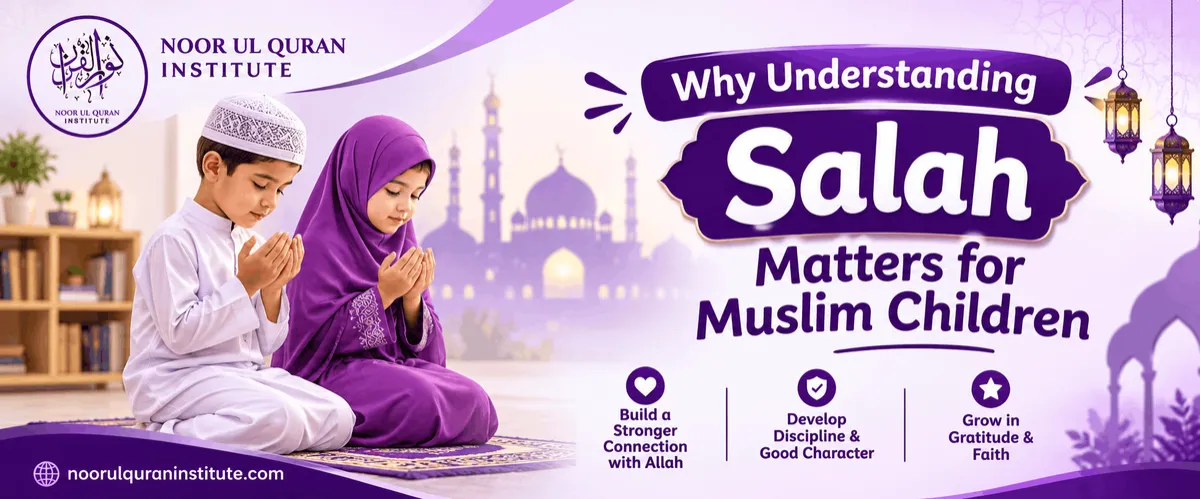
Why Understanding Salah Matters for Muslim Children
Salah is one of the most important acts of worship in Islam, but helping children understand its meaning is just as important as teaching them how to perform it. When Muslim children learn why Muslims pray five times a day, they begin to recognize Salah as more than a daily responsibility. It becomes a meaningful way to remember Allah, express gratitude, seek guidance, and strengthen their faith.
For parents, introducing the importance of Salah for kids is an essential part of Islamic upbringing. Children who understand the purpose of prayer can gradually develop a positive relationship with worship instead of viewing it as just another task in their daily routine. By explaining Islamic teachings in simple language and leading by example, families can help young Muslims appreciate the spiritual value of Salah from an early age.
1. Helping Children Understand the Meaning of Salah
Salah is the prescribed daily prayer through which Muslims worship Allah. It involves specific recitations, movements, supplications, and moments of remembrance that bring a believer closer to their Creator.
For children, understanding Salah should begin with simple explanations. Parents can explain that prayer is a special opportunity to remember Allah, thank Him for His blessings, ask for guidance, and express love and devotion.
Instead of focusing only on memorizing the steps of prayer, parents can introduce its meaning through everyday examples. For instance, children can learn that just as they talk to their parents when they need help, Salah gives them a special opportunity to turn to Allah through worship and supplication.
This understanding makes Islamic prayer more meaningful and helps children recognize its importance in everyday Muslim life.
2. Building a Strong Connection with Allah
One of the greatest reasons Salah matters for Muslim children is the connection it develops between a believer and Allah.
Through five daily prayers, children learn that Allah is always worthy of remembrance, gratitude, and worship. They also begin to understand that they can turn to Him during happy moments, difficult situations, and times when they need guidance.
Parents can explain this connection through simple conversations:
Thanking Allah for health, family, and everyday blessings.
Asking Allah for help when facing challenges.
Remembering Allah before and after daily activities.
Understanding that worship is an important part of Muslim identity.
When children recognize that Salah is an opportunity to remember Allah, they can gradually develop a sincere appreciation for prayer.
3. Teaching Self-Discipline and Responsibility
The importance of Salah for children also extends to their everyday behavior. The five daily prayers introduce a regular structure into a Muslim's day and remind believers to make time for worship.
As children become familiar with prayer times, they begin to understand the value of consistency, responsibility, and organizing their daily activities.
Salah can help children appreciate:
Consistency: Remembering Allah regularly throughout the day.
Responsibility: Recognizing the importance of religious commitments.
Time awareness: Understanding that different activities have their appropriate times.
Patience: Learning to pause, focus, and participate in worship.
Commitment: Developing positive habits through regular practice.
These lessons can support children's personal development while strengthening their understanding of Islamic values.
4. Developing Gratitude, Humility, and Good Character
Salah reminds Muslims that every blessing comes from Allah and that people should approach Him with humility and gratitude.
For young learners, these ideas can become valuable lessons in character development. Parents can explain how prayer encourages Muslims to appreciate their blessings, avoid arrogance, show kindness, and remain mindful of their actions.
Children can gradually connect the values of Salah with everyday situations:
Showing gratitude when receiving something good.
Treating parents, teachers, and friends respectfully.
Being patient when something does not go as planned.
Helping others without expecting a reward.
Recognizing the importance of honesty and kindness.
Prayer alone does not automatically guarantee good behavior. However, understanding its teachings and applying Islamic values in daily life can help children develop a stronger moral foundation.
Parents can reinforce these lessons through their own behavior and regular family conversations.
5. Understanding Why Muslims Pray Five Times a Day
Children often wonder why Muslims pray five times every day. This is a valuable opportunity for parents to explain the role of Salah in Islamic worship.
The five obligatory daily prayers are:
Fajr: The prayer performed before sunrise.
Dhuhr: The midday prayer.
Asr: The afternoon prayer.
Maghrib: The prayer performed after sunset.
Isha: The night prayer.
Each prayer gives Muslims an opportunity to pause their daily activities and remember Allah.
Parents can explain that these prayers are not simply repeated routines. They are an essential part of Islamic worship that helps believers maintain a regular connection with their Creator.
For children, learning the names and general timings of the five prayers can make Islamic practices easier to recognize and understand.
6. Making Salah Meaningful Instead of Treating It as a Routine
Children are more likely to appreciate Salah when they understand what they are learning and why it matters.
Simply asking children to repeat prayer movements or memorize recitations may not provide a complete understanding of worship. Age-appropriate explanations can help them connect the words and actions of Salah with their Islamic beliefs.
Parents can make learning more meaningful through these approaches:
Explain the basic meaning of Salah in simple language.
Introduce the purpose of different prayer positions.
Help children understand the importance of remembering Allah.
Encourage them to ask questions about Islamic worship.
Discuss gratitude, patience, and humility during family conversations.
Allow children to observe and participate in family prayer.
A supportive learning environment helps children explore their faith without feeling overwhelmed. Their questions should be welcomed, and explanations should match their age and understanding.
7. The Role of Parents in Teaching Children the Importance of Salah
Parents play an important role in shaping children's understanding of Islamic worship. Children often learn by observing the habits and behavior of the adults around them.
When parents maintain their own prayers, explain Islamic teachings, and encourage children with kindness, they provide a positive example of Muslim life.
Some helpful parenting practices include:
Lead by Example: Let children observe the importance of daily Salah through consistent family routines.
Explain the Purpose: Discuss why Muslims pray instead of focusing exclusively on completing the physical actions.
Encourage Questions: Give children opportunities to ask about Allah, worship, and Islamic practices.
Keep Learning Age-Appropriate: Use simple explanations, stories, and practical examples that match their development.
Create a Supportive Environment: Encourage children without using fear, pressure, or comparisons with others.
Parents can also introduce children to structured Islamic education to help them understand essential beliefs, worship, and everyday Muslim practices.
8. How Islamic Education Helps Children Appreciate Salah
A structured Islamic learning environment can help children understand the wider meaning of Salah and its place in Muslim life.
Through age-appropriate lessons, young learners can explore Islamic beliefs, worship, daily duas, Islamic manners, and the importance of remembering Allah.
For example, learning about Adhan helps children understand how Muslims are reminded of prayer times. Exploring Islamic stories can also introduce values such as faith, patience, gratitude, and obedience to Allah.
Parents interested in building a stronger Islamic foundation can explore an Islam for Kids course to introduce children to essential Islamic teachings and practices.
Children can also benefit from learning about Adhan and its importance in Islam, which explains how the call to prayer reminds Muslims to prepare for Salah.
For a broader understanding of religious learning, parents can explore Islamic classes for kids, including course options and curriculum.
9. Connecting Salah with Everyday Islamic Values
Understanding Salah becomes more meaningful when children recognize how Islamic teachings relate to their everyday lives.
Prayer encourages remembrance of Allah, while Islamic education introduces children to values that guide their behavior outside prayer as well.
For example, parents can connect the lessons of worship with:
Respecting parents and elders.
Speaking honestly and avoiding harmful behavior.
Practicing patience during difficult situations.
Showing kindness to family members and classmates.
Being thankful for everyday blessings.
Remembering Allah in different situations.
Parents can strengthen these lessons by introducing Islamic manners for kids, which explores important values and everyday habits for young Muslims.
They can also share Quran stories that build faith, patience, and strong Islamic values to help children connect Islamic teachings with practical life lessons.
Conclusion: Help Children Discover the Meaning Behind Salah
Understanding Salah is an important part of a Muslim child's spiritual development. When children learn why Muslims pray, how Salah connects them with Allah, and what values it teaches, they can begin to appreciate prayer as a meaningful part of their faith.
Parents can support this journey through positive examples, simple explanations, family prayer routines, and age-appropriate Islamic education. The goal is not only to teach children how to pray but also to help them understand why Salah holds such an important place in Islam.
Noor ul Quran Institute offers structured Islamic learning through its Islam for Kids program, helping young learners explore essential Islamic beliefs and practices. Parents can explore the program and claim a free three-day trial to experience the learning environment.
Frequently Asked Questions
1. Why is Salah important for Muslim children?
Salah introduces children to an essential act of worship in Islam. Understanding its purpose helps them appreciate their connection with Allah, develop spiritual awareness, and recognize the importance of regular prayer.
2. Why should children understand the meaning of Salah?
Understanding the meaning of Salah helps children recognize prayer as more than a series of movements. It introduces them to remembrance of Allah, gratitude, humility, and the purpose of worship.
3. How does Salah help develop discipline in children?
The five daily prayers introduce regular worship into a Muslim's routine. As children become familiar with prayer times, they can learn consistency, responsibility, patience, and time awareness.
4. How can parents explain Salah to young children?
Parents can use simple language, everyday examples, family prayer routines, and age-appropriate Islamic lessons. Explaining why Muslims pray can help children develop a meaningful understanding of worship.
5. What are the five daily prayers in Islam?
The five obligatory daily prayers are Fajr, Dhuhr, Asr, Maghrib, and Isha. Muslims perform these prayers at their prescribed times throughout the day.
6. How can Islamic classes help children understand Salah?
Islamic classes introduce children to essential beliefs, worship, Islamic values, and religious practices through structured lessons. Qualified teachers can explain these concepts in ways that match children's learning levels.
7. How can parents encourage children to appreciate Salah?
Parents can lead by example, explain the purpose of prayer, welcome questions, encourage participation, and create a supportive environment where children can learn about worship without unnecessary pressure.